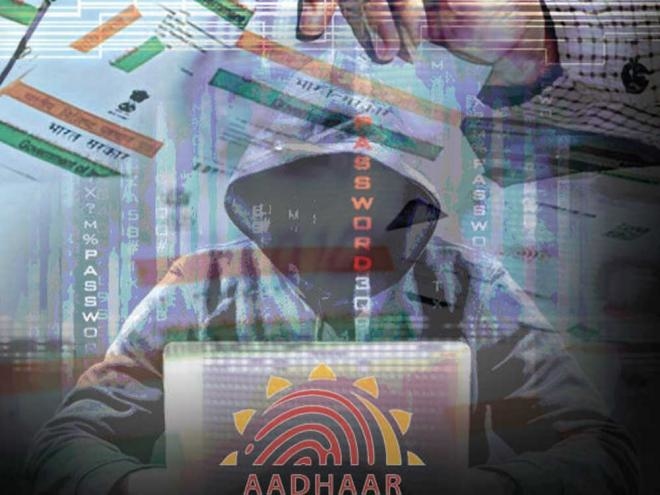
In 2009, I became extremely concerned with the concept of Unique Identity for various reasons. Connected with many like minded highly educated people who were all concerned.
On 18th May 2010, I started this Blog to capture anything and everything I came across on the topic. This blog with its million hits is a testament to my concerns about loss of privacy and fear of the ID being misused and possible Criminal activities it could lead to.
In 2017 the Supreme Court of India gave its verdict after one of the longest hearings on any issue. I did my bit and appealed to the Supreme Court Judges too through an On Line Petition.
In 2019 the Aadhaar Legislation has been revised and passed by the two houses of the Parliament of India making it Legal. I am no Legal Eagle so my Opinion carries no weight except with people opposed to the very concept.
In 2019, this Blog now just captures on a Daily Basis list of Articles Published on anything to do with Aadhaar as obtained from Daily Google Searches and nothing more. Cannot burn the midnight candle any longer.
"In Matters of Conscience, the Law of Majority has no place"- Mahatma Gandhi
Ram Krishnaswamy
Sydney, Australia.

Aadhaar

The UIDAI has taken two successive governments in India and the entire world for a ride. It identifies nothing. It is not unique. The entire UID data has never been verified and audited. The UID cannot be used for governance, financial databases or anything. It’s use is the biggest threat to national security since independence. – Anupam Saraph 2018

When I opposed Aadhaar in 2010 , I was called a BJP stooge. In 2016 I am still opposing Aadhaar for the same reasons and I am told I am a Congress die hard. No one wants to see why I oppose Aadhaar as it is too difficult. Plus Aadhaar is FREE so why not get one ? Ram Krishnaswamy

First they ignore you, then they laugh at you, then they fight you, then you win.-Mahatma Gandhi

In matters of conscience, the law of the majority has no place.Mahatma Gandhi

“The invasion of privacy is of no consequence because privacy is not a fundamental right and has no meaning under Article 21. The right to privacy is not a guaranteed under the constitution, because privacy is not a fundamental right.” Article 21 of the Indian constitution refers to the right to life and liberty -Attorney General Mukul Rohatgi

“There is merit in the complaints. You are unwittingly allowing snooping, harassment and commercial exploitation. The information about an individual obtained by the UIDAI while issuing an Aadhaar card shall not be used for any other purpose, save as above, except as may be directed by a court for the purpose of criminal investigation.”-A three judge bench headed by Justice J Chelameswar said in an interim order.

Legal scholar Usha Ramanathan describes UID as an inverse of sunshine laws like the Right to Information. While the RTI makes the state transparent to the citizen, the UID does the inverse: it makes the citizen transparent to the state, she says.

Good idea gone bad
I have written earlier that UID/Aadhaar was a poorly designed, unreliable and expensive solution to the really good idea of providing national identification for over a billion Indians. My petition contends that UID in its current form violates the right to privacy of a citizen, guaranteed under Article 21 of the Constitution. This is because sensitive biometric and demographic information of citizens are with enrolment agencies, registrars and sub-registrars who have no legal liability for any misuse of this data. This petition has opened up the larger discussion on privacy rights for Indians. The current Article 21 interpretation by the Supreme Court was done decades ago, before the advent of internet and today’s technology and all the new privacy challenges that have arisen as a consequence.

Rajeev Chandrasekhar, MP Rajya Sabha

“What is Aadhaar? There is enormous confusion. That Aadhaar will identify people who are entitled for subsidy. No. Aadhaar doesn’t determine who is eligible and who isn’t,” Jairam Ramesh

But Aadhaar has been mythologised during the previous government by its creators into some technology super force that will transform governance in a miraculous manner. I even read an article recently that compared Aadhaar to some revolution and quoted a 1930s historian, Will Durant.Rajeev Chandrasekhar, Rajya Sabha MP

“I know you will say that it is not mandatory. But, it is compulsorily mandatorily voluntary,” Jairam Ramesh, Rajya Saba April 2017.

August 24, 2017: The nine-judge Constitution Bench rules that right to privacy is “intrinsic to life and liberty”and is inherently protected under the various fundamental freedoms enshrined under Part III of the Indian Constitution

"Never doubt that a small group of thoughtful, committed citizens can change the World; indeed it's the only thing that ever has"

“Arguing that you don’t care about the right to privacy because you have nothing to hide is no different than saying you don’t care about free speech because you have nothing to say.” -Edward Snowden

In the Supreme Court, Meenakshi Arora, one of the senior counsel in the case, compared it to living under a general, perpetual, nation-wide criminal warrant.

Had never thought of it that way, but living in the Aadhaar universe is like living in a prison. All of us are treated like criminals with barely any rights or recourse and gatekeepers have absolute power on you and your life.

Announcing the launch of the # BreakAadhaarChainscampaign, culminating with events in multiple cities on 12th Jan. This is the last opportunity to make your voice heard before the Supreme Court hearings start on 17th Jan 2018. In collaboration with @no2uidand@rozi_roti.

UIDAI's security seems to be founded on four time tested pillars of security idiocy

1) Denial

2) Issue fiats and point finger

3) Shoot messenger

4) Bury head in sand.

God Save India

Showing posts with label ECMP. Show all posts

Monday, May 7, 2018

13479 - Chinks in Aadhaar enrolment raise security concerns - Hindu Businessline


FSMI asks UIDAI to clarify, detail steps taken to make the system safe

HYDERABAD, MAY 7
The Free Software Movement of India (FSMI) has expressed serious concerns on the safety of users’ Aadhaar data. The association has written a letter to the Unique Identification Authority of India (UIDAI) on YouTube videos that demonstrate methods to bypass security layers in Aadhaar enrolment.

“There are WhatsApp messages circulating about a patched version of the Enrollment Client Management Platform (ECMP) software used for offline Aadhaar enrolment. This can potentially be used to bypass geo-location and bio-metrics, and also change the mapping between personal data of Aadhaar holders and their biometric data,” the FSMI has said in the letter.

It wanted to know what are the steps the UIDAI is taking to make the Aadhaar system safe, as the security problems seem to emanate from inherent design flaws in the Client Server architecture of Aadhaar.

There are also many videos uploaded to YouTube too were available that show how to use a software patch to the ECMP software can help bypass geo-location and biometric security protection.

“These videos claim that new Aadhaar enrollments can be made without any verification and that personal information pertaining to existing Aadhaar numbers can be changed, bypassing any security checks including OTPs (one-time passwords) and bio-metric verification.

“If this is true, then it is a matter of very serious concern as it endangers the sanctity of the entire Aadhaar database. We would like to know whether UIDAI authority has carried out any examination of these claims, and if there is any merit to these claims regarding the security of the Aadhaar enrolment software being compromised,” the FSMI said.
Published on May 07, 2018

13469 - How long can its captain – UIDAI – continue to deny the Aadhaar leaks? - News Click


Newsclick Report 04 May 2018


A few days back, Asia Times and Medium, a popular website reported on security holes in the Aadhaar system. Saikat Datta wrote that a number of people have warned the UID Authority of this hole, without getting any response. Today, the French security expert, who goes by the twitter handle Elliot Alderson @fs0c131y and had earlier exposed a number of security breaches in the Aadhaar and government websites, has tweeted the details of a YouTube video that shows a software that can be used to edit the personal data of anybody enrolled in the Aadhaar system; that too without any security checks! And to add insult to the injury – for UIDAI – the person who posted the video is asking those who liked his video for contributions to his PayTM account.


Is the video fake? If it is, we can heave a sigh of relief. The problem is that very similar complaints have been made by various people to UIDAI without any response, indicating that this software is available for as little as Rs. 500. Anand Venkatanarayanan, in his Medium piece , has also explained why a software – called ECMP (Aadhaar Enrolment Client Multiplatform) software – that resides in the e-Kendra computers, can be hacked more easily. And if it is hacked, it will allow any change in the personal data of the person enrolled in the Aadhaar database. This means the mapping between the biometric and the personal data can be changed.

UIDAI’s contention is that the biometric database cannot be hacked and remains behind secure walls (13 feet high according to the Attorney General). The problem is not that the ridges and whorls of our fingers are safely stored, but whether the name and other details, attached to the fingerprints, are truly mine. If they are not secure and can be changed by buying a Rs 500 software, it means identity theft can occur on a mass scale. And more service providers are added to the Aadhaar system, more potential of holes for such identity thefts. This is the central risk of the Aadhaar system. And our nightmare.

We have been warning the government in our columns and videos, why the Aadhaar system is a poor one and will not lead to any foolproof identity verification system. If biometrics are used, poor connectivity, lack of electricity, apart from at least 10% of biometrics like fingerprints not being verifiable, will defeat the system. If biometrics are dispensed with, the Aadhaar ID proof is as good as self-certification. Why then, are tens of thousands of crores being spent on the system?

The logic of the system lies elsewhere. Yes, Aadhaar system leaks like a sieve. It is capable of being bypassed in various ways. Yes, people who are legitimate beneficiaries of various systems are being denied their dues or rations, as the biometric system does not work properly.

So what is the purpose of Aadhaar? For the government, it provides a method of collecting a huge amount of information of the citizens: religion, caste, geotagging of their houses, collating it with their income and expenditures, etc. This is a surveillance tool that can be used against individuals and communities. For a government that is against a particular section, it can be used to bypass from development in certain areas, where a particular community may be staying. For big Indian capitalists, such as Ambanis, it provides the tool of big data at government expense. Once such big data is available, the capitalists can tap into it in various ways. This is why, from a Nilekani to an Ambani, all of them have lined up behind Aadhaar.

Unfortunately for both the government and big capitalists, the ecosystem of Aadhaar, as engineered and deployed, is so poor that it is likely to fail. Sooner rather than later. Even if the Supreme Court does not strike it down on our privacy violations.

The Aadhaar system is increasingly looking like a ship with a large number  of holes. How long can its captain – UIDAI – continue to deny these leaks? And how long will we pump in good money after the bad?


Thursday, May 3, 2018

13440 - UIDAI Says Stringent Processes in Place, Slams Aadhaar Enrolment Software Breach Reports - NDTV


Press Trust of India, 03 May 2018


HIGHLIGHTS
  • Have blacklisted over 50,000 operators for various violations: UIDAI
  • There are reports of alleged tampering of Aadhaar enrolment software
  • Tampering said to help bypasses operators' biometric authentication

UIDAI on Thursday said it follows a "stringent enrolment and updation process" for issuance of Aadhaar cards, and has blacklisted over 50,000 operators for various violations, amid reports of a breach in its enrolment software.

The Unique Identification Authority of India (UIDAI) said its enrolment software comes with necessary safeguards and checks to protect against any manipulation, as it discredited the claims in the report as "baseless and false".

The statement comes after reports of alleged tampering of the Aadhaar enrolment software and being sold in the black market, which purportedly bypasses operators' biometric authentication and facilitates issuance of Aadhaar cards without any documents.

Emphasising its "zero tolerance policy" when it comes to ensuring security and safety of its processes, UIDAI said that any operator found to be violating its stipulated processes or those indulging in any type of fraudulent or corrupt practices, are blocked, blacklisted and also face stiff financial penalty of up to Rs. 1 lakh per instance.

"Also, all such enrolment attempts get rejected and Aadhaar is not generated. As on date more than 50,000 operators have been blacklisted," the UIDAI added statement said. The UIDAI said its system matches all the biometric, that is all 10 fingerprints and both irides, of a resident enrolling for Aadhaar with the biometrics of all Aadhaar holders before issuing the 12 digit identifier.

"No operator can make or update Aadhaar unless the resident himself or herself gives his or her biometric. Any enrolment or update request is processed only after biometric of resident is authenticated," UIDAI said.

Detailing the stringent processes followed by it, UIDAI said prior to processing of the enrolment or updation activity, the operator's biometric and other parameters are also checked. Only once all checks are found to be successful, enrolment or updation request of resident is further processed.

"Some of the checks include biometric check of operator, validity of operator, enrolment machine, enrolment agency and registrar, which are verified at UIDAI's backend system before further processing is done. In cases where any of the checks fails, the enrolment request gets rejected and action against such operator is taken", UIDAI added.


13438 - Aadhaar Enrolment Software not compromised with: UIDAI - Economic Times


Read more at:

13435 - Compromised Aadhaar enrolment software being sold for as little as Rs 500: Report - Business Today

Compromised Aadhaar enrolment software being sold for as little as Rs 500: Report
 BusinessToday.In   New Delhi     
Last Updated: May 2, 2018  | 12:09 IST

PC: Reuters
The Unique Identification Authority of India (UIDAI) has usually been quick to refute most reports of Aadhaar database breaches and leaks. But at a time when a far more serious security threat is reportedly looming in the enrolment side of things, the authority tasked with issuing the unique ID number is being uncharacteristically tight-lipped.

What is the new threat?
According to a report in the Asia Times, a modified Aadhaar enrolment software, known as ECMP (Enrolment Client Multi Platform), has been compromised. It is, in fact, being illegally distributed for as little as Rs 500, going up to Rs 2,000.
ECMP is basically Aadhaar client software that was developed to allow enrolment operators to collect personal data and biometrics from applicants in order to generate the 12-digit number. It was supposed to be fully-secure, since it not only required biometrics of an authorized operator but also sought out geo-location. The latter, on paper, ensured that the sensitive data was being collected by someone authorised to do so, in a secure and mandated location.

However, the report claims that a "jailbreak" version of the software was on sale on certain WhatsApp groups among Punjab-based enrolment operators, which promised to bypass the above-mentioned biometric and geo-location safeguards. The illegal software basically came preconfigured with user credentials of various registrars. "The GPS module to track the location of the enrolment has also been disabled through a patch," an information security professional, who looked at the compromised software, told Asia Times. Worse, this version of the software could be installed on any laptop.

Why is it a concern?
The compromised ECMP software sans any safeguards would effectively allow anybody to pose as an authorised Aadhaar enrolment operator, free to enrol anyone they like, from anywhere in the world, and pass off their information as legitimate. Given that Aadhaar is being billed by the government as a tamper-proof verification for identity as well as residency, imagine what will happen if this hacked software is unleashed in areas prone to illegal migrant flows like Assam or in areas susceptible to militant intrusions like Jammu and Kashmir.

Furthermore, as the report explains, the compromised ECMP will allow any unauthorised entity to update anyone's identity and address details without any verification, bypassing all security protocols set in place by UIDAI. So the threat posed by this "jailbreak" ECMP version is actually a pan-India concern.
In March, Ajay Bhushan Pandey, CEO of UIDAI, had declared that "Each Aadhaar biometric is encrypted by a 2048-key combination and to decode it, the best and fastest computer of our era will take the age of the universe just to hack into one card's biometric details." But what about a compromised enrolment process itself, which puts a question mark on the authenticity of the Aadhaar data collected?

Does UIDAI know about this threat?
An operator from Punjab, Bharat Bhushan Gupta, reportedly informed UIDAI about the compromised software in an email, even offering help to access to the same. Just last month, a Punjab-based journalist also alerted the Aadhaar body about these developments. But while UIDAI acknowledged the warnings, the daily claims that no details of any follow-up action were forthcoming.


(With PTI inputs)

13434 - Aadhaar enrollment software being illegally distributed with biometric safeguards disabled - Biometric Updata

May 1, 2018 | Chris Burt


The Aadhaar program’s ECMP enrollment software is being distributed illegally for 500 to 2,000 rupees (US$7.50 to $30) in the latest data privacy headache for the Unique Identification Authority of India (UIDAI), Asia Times reports.

The software protects data by verifying the biometrics of the authorized operator and checking the geo-location of the device it is being used on, but the Times says WhatsApp messages it has seen and complaints to the UIDAI indicating the safeguards are being bypassed.


“(The) Aadhaar Enrolment client can be installed on any laptop and is available for public download. It needs to be configured for use by a registrar by importing registrar data and user credentials of the registrar,” one of two information security professionals who examined the illegal software for the Times said. The illegal version is patched to bypass the biometric and GPS modules of the software, and comes preconfigured with credentials from different registrars.

Enrollment operator Bharat Bhushan Gupta of Punjab state emailed UIDAI in February to warn the authority of the illegal software, but after his warnings were acknowledged he received no further communication on the matter.

The UIDAI has acknowledged receiving security alerts, but has yet to issue a statement, leading to speculation that the problem is ongoing, the Times says. Enrollment issues have been among the problems dogging India’s ambitious universal identity scheme, and the UIDAI blacklisted nearly 50,000 private operators in 2017 before shutting down its network of common service centers providing enrollment in rural locations earlier this year. The enrollment process was shifted largely to bank branches and post offices.

The Times also reports that the UIDAI does not have a responsible disclosure program, and is hostile to operators and journalists reporting potential Aadhaar security problems.
The entire Aadhaar program and various processes associated with it are still before India’s top court, and the deadline to link the ID number to tax records was recently extended to the end of June.

Related Posts

Wednesday, May 2, 2018

13415 - India’s ambitious digital ID project faces new security nightmare - Asia Times


A slew of complaints and alerts to UIDAI reveal that operators can bypass biometric and geo-location safeguards to access the database illegally


By SAIKAT DATTA MAY 1, 2018 12:52 PM (UTC+8)

A citizen's biometric data is collected for his Aadhaar card. Photo: Wikipedia Commons

India’s all-pervasive digital identity programme Aadhaar appears to be facing a fresh security scare. The concern may also have national security implications, as suggested by material accessed by Asia Times.

The key to the latest security breach comes from a modified Aadhaar enrolment software, known as ECMP, which is being distributed illegally for a cost ranging from Rs 500 to Rs 2,000.

Must-reads from across Asia - directly to your inbox

Alerts to the Unique Identification Authority of India (UIDAI) and other government agencies have been acknowledged, but no detail of any follow-up action has been revealed. This has given rise to suspicion that the breach is yet to be resolved.

The ECMP was developed as software that can be used by operators to register people so they can get unique digital Aadhaar numbers. There is an elaborate program that allowed “enrolment partners” to be contracted by UIDAI to sign up citizens and residents across the country. The ECMP software ensures that sensitive personal data of those signing up is securely collected in a prescribed format to generate their Aadhaar number.

However, as reports of enrolment fraud began to surface, the UIDAI blacklisted nearly 50,000 private operators and mandated public sector banks and post offices to carry out the enrolment.

For the erstwhile private operators, the blacklisting was a major blow. Public sector banks were overloaded with the additional work of signing up citizens and residents.  The government has made Aadhaar mandatory for filing taxes as well as having bank accounts and a cell-phone connection. Nearly a billion people were signed up, even as the government was engaged in a slew of litigation in India’s Supreme Court challenging the project.

A number of petitioners have challenged the Aadhaar project on the ground that it enables mass surveillance by the state, violates citizens’ privacy and poses a major danger to legitimate entitlements guaranteed by the Indian Constitution. The slew of cases led to an unprecedented nine-judge constitutional bench of the Supreme Court ruling that privacy was a “fundamental right” under the Constitution. The other petitions challenging the program are still being heard by the Supreme Court.

The ECMP software allowed the operators to collect biometric data such as iris scans and fingerprints, as well as details of address and date of birth, among other sensitive personal data. The software has two major safeguards to ensure that it can not be misused. It asks for the biometrics of the authorized operator and seeks the geo-location to ensure that not only is the data being collected by someone authorized to do so, but to also ensure that it is being done at a secure and mandated location. There are many videos explaining how this software can be downloaded and installed.

Software ‘compromised to bypass safeguards’
But material gleaned from group WhatsApp messages of erstwhile private operators and complaints to the UIDAI reveal that the software has been compromised. This allows illegal access to the Aadhaar database by by-passing the biometric and geo-location safeguards.

Messages posted in several WhatsApp groups among Punjab-based operators began to surface at the end of last year, offering to sell a “jailbreak” version of the software. This version, to be installed on the laptops of anyone willing to pay the amount, could bypass the biometric and geo-location safeguards. This basically meant that anyone posing as an “authorized operator” could make changes to the data and enrol new people from anywhere and pass their information off as legitimate. This is easier as the number is only proof of residency and not citizenship.

An Aadhaar government identification card. Photo: iStock

Two information security professionals who looked at the compromised software confirmed to Asia Times that the safeguards had been bypassed. “(The) Aadhaar Enrolment client can be installed on any laptop and is available for public download. It needs to be configured for use by a  registrar (Banks, State governments) by importing registrar data and user credentials of the registrar”, the information security professional said, on strict condition of anonymity.

According to a second information security professional, enrolment and updates are possible only if an operator’s credentials match with their biometrics. However, the illegal enrolment software has been patched to bypass biometric checks and comes preconfigured with user credentials of various registrars. “The GPS module to track the location of the enrolment has also been disabled through a patch,” this expert said. “This allows anyone to become an Aadhaar enrolment operator, thereby violating all the security protocols that UIDAI has put in place for enrolment, including document verification such as proof of identity, proof of address. It also allows anyone to update their proof of identity or address details without any checks whatsoever.”

According to the experts, disabling or ‘spoofing’ the GPS checks gives rise to the possibility of the enrolment happening anywhere in the world, thereby allowing even foreign nationals who have never visited India, to enrol in Aadhaar.

None of these hacks are new. On February 23 this year, UIDAI authorities from the city of Chandigarh filed an official complaint with the Haryana Police. The case found a group of people working in the district of Hisar, using fake rubber thumbprints to bypass the biometric safeguards of the operator. This group was illegally accessing the database, as well as carrying out enrolments.

In the neighboring state of Uttar Pradesh, the police registered an official complaint in the capital Lucknow in August 2017. In this case, the UIDAI found operators who had managed to bypass the biometric safeguards as well.

‘Hostile’ UIDAI
These details and possibilities were brought to the UIDAI’s knowledge by email by an operator from Punjab. Bharat Bhushan Gupta sent them several warnings, which were acknowledged by UIDAI. But he was never informed about any follow-up. Gupta said he was willing to help the UIDAI access the compromised software and enable officials to examine the bypass in detail. But he never heard from them again.
Subsequently, a Punjab-based journalist with a major newspaper also accessed details of the compromised software and promptly alerted the UIDAI in writing in mid-April. This was also acknowledged, but no details of any follow-up action were shared.

To ensure good cybersecurity, the discovery of vulnerabilities depends largely on voluntary disclosure from hackers and information security professionals. However, despite being in existence from 2009, UIDAI lacks a responsible disclosure program, and in fact adopts a hostile stance against any disclosure. In the past, the agency has filed police complaints, not even sparing journalists who only reported on similar vulnerabilities. As a result, most experts shy away from informing the UIDAI about such problems. It continues to claim that their database is safe, despite mounting evidence to the contrary.

Asia Times sent the following queries to the CEO and chairman of UIDAI, to seek a response to these issues. The story will be updated as and when they respond.

1. Is it true that the Enrolment Client Management Platform (ECMP) software, being used for off-line enrolment has been found to have vulnerabilities, which can be exploited to bypass geo-location and biometrics?
2. Is the UIDAI aware that a group of illegal operators are using this software and installing it for a price, enabling people to carry out illegal enrolment and updates?
3. What is the progress on the UP Aadhaar hack – illegal enrolment case, where the Enrolment software was hacked as per the registered First Information Report in September 2017?
4. Was the ECMP software sufficiently hardened so that the above vector of patching the software to bypass an operator’s biometrics cannot happen?
5. If yes, what are the technical measures put in place to plug this vulnerability?
6. A similar incident was reported by operator Bharat Bhushan Gupta from Jullundur on Feb 1, 2018, which the UIDAI has acknowledged. What was the resolution of that incident and details thereof?
7. The same vulnerability was reported by Ms Rachna Khaira and also reported to the National Critical Information Infrastructure Protection Center on April 15, 2018. What is UIDAI’s response to this?