|
pti
Reserve Bank of India (RBI) has constituted a High-Level Committee on Deepening of Digital Payments to encourage digitisation of payments and enhance financial inclusion.
The five-member committee headed by UIDAI’s former Chairman Nandan Nilekani will include RBI’s former Deputy Governor Mr. H.R. Khan and Former Secretary, Ministry of Information Technology, Mrs. Aruna Sharma among others.
In a statement, RBI said the committee will review the existing status of digitisation of payments and suggest ways to bridge any gaps in the ecosystem, if any.
The committee will also undertake cross country analysis to identify best practices that can be adopted to accelerate digitisation of the economy and financial inclusion through greater use of digital payments.
The Nandan Nilekani led panel will suggest measures to strengthen the safety and security of digital payments; while also providing a road map for increasing customers’ trust while accessing financial services through digital modes.
The Committee will have to submit its report within a period of 90 days from the date of its first meeting.
|
|

Showing posts with label RBI. Show all posts
Showing posts with label RBI. Show all posts
Sunday, January 13, 2019
14011 - RBI forms committee to boost digital payments - News on Air

Thursday, April 26, 2018
13352 - Ahead of SC verdict, RBI makes Aadhaar linkage compulsory for bank accounts - Entrakr
By Jitendra Singh -
April 22, 2018
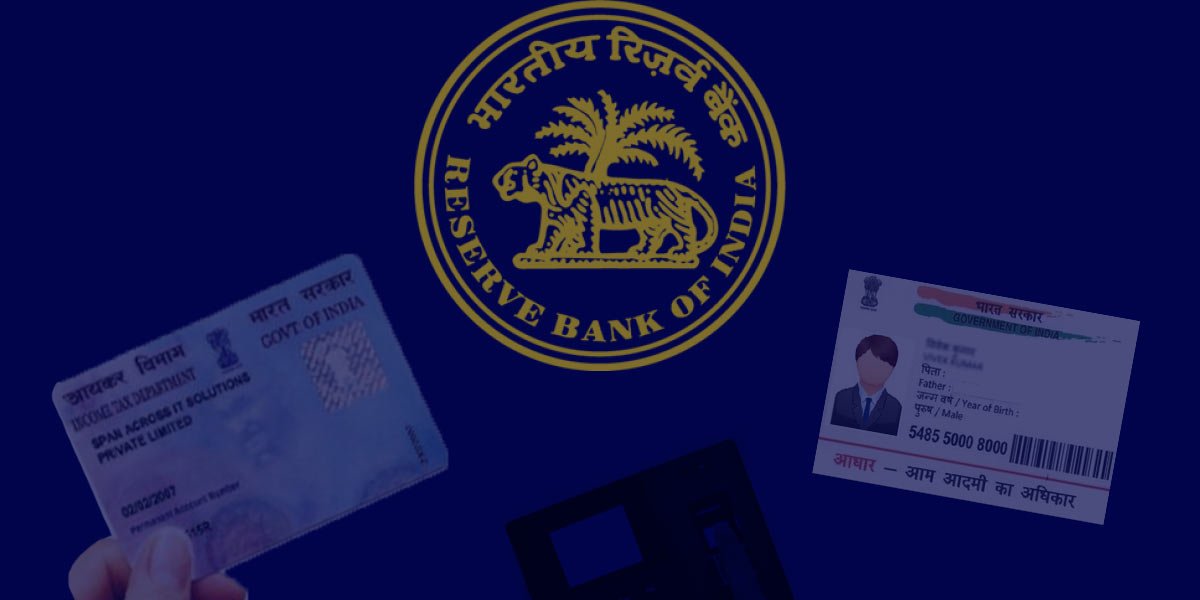
At a time when the Supreme Court is about to have final word on Aadhaar linking issue, the Reserve Bank of India (RBI) has amended its ‘know your customer’ (KYC) guidelines, making Aadhaar and PAN mandatory to maintain a bank account.
In a circular, the central bank said the norms have been revised because the government had amended laws on prevention of money laundering through a gazette notification in June 2017.
“The customer, eligible to be enrolled for Aadhaar and obtain the Permanent Account Number, except one who is a resident in the State of Jammu and Kashmir or Assam or Meghalaya, already having an account based relationship with regulated entities (like banks), shall submit the Aadhaar number and PAN/ Form 60 by such date as may be notified by the Central Government,” the RBI said while updating its Master direction on Know Your Customer (KYC) norms.
In case the customer fails to submit the Aadhaar number and Permanent Account Number/form 60, the account shall be deactivated till the documents get submitted.
The Aadhaar requirement though is relaxed for residents of Jammu & Kashmir, Assam and Meghalaya. It also added that the periodic updation should be carried out at least once in every two years for high-risk customers, once in every eight years for medium risk customers and once in every ten years for low-risk customers.
The move, however, will be subject to the verdict in the apex court, clarified the central bank. In March, the SC struck down a March 31 deadline for mandatory linking of Aadhaar to avail of various services until its constituent bench came up with a verdict.
This is RBI first guidelines after the government had notified the norms on June 1, 2017. The government had made Aadhaar mandatory for opening bank accounts as well as for any financial transaction of Rs 50,000 and above.
In budget 2017, it had already mandated seeding of Aadhaar number with PAN to avoid individuals using multiple PANs to evade taxes.
The central bank was in discussion with the government and had pointed out several lacuna in the mandatory linking of Aadhaar with bank accounts, said sources close to the development.
A person who is residing in India for more than 180 days is eligible for applying for a Aadhaar number, according to Aadhaar Act.
Earlier, last year, RBI had also directed companies and banks to make KYC (know-your-customer) compliant prepaid payment instruments (PPIs) — mobile wallets, interoperable within the next six months. According to the new guidelines, all the PPIs will now be interoperable, which means it will allow a transaction with each other. It brought in fraud detection norms to prevent fake wallet transactions.
Wednesday, February 28, 2018
12886 - RBI plans to stop Aadhaar misuse, but will it work? - Business Today
Manu Kaushik New Delhi Last Updated: February 23, 2018 | 19:33 IST
In the wake of telecom companies misusing the Aadhaar-based eKYC verification for opening accounts in their payments bank, the Reserve Bank of India (RBI) has recently clarified that the verification done by telecom operators on behalf of payments bank will not be considered valid. In addition, the payments banks which have relied on the KYC done by telcos will have to re-verify their customers' credentials.
RBI's decision is aimed at keeping a check on the malpractices by telecom companies, who are also the promoters of payments bank. For instance, the UIDAI suspended eKYC license of Airtel Payments Bank last month for allegedly opening accounts and force-seeding them with Aadhaar without the consent of its telecom customers. Airtel also routed LPG subsidy worth Rs 190 crore to those payments bank accounts without the information of its customers.
As in the case of Airtel, the customers were not aware that their Aadhaar, which they were willingly giving for new mobile connections, were being used to open Airtel payments bank accounts. Since it's becoming increasingly difficult for customers - and the government agencies - to stop Aadhaar misuse, it's better to uncouple KYC processes for opening a payments bank account and buying a new mobile connection.
RBI's decision is aimed at keeping a check on the malpractices by telecom companies, who are also the promoters of payments bank. For instance, the UIDAI suspended eKYC license of Airtel Payments Bank last month for allegedly opening accounts and force-seeding them with Aadhaar without the consent of its telecom customers. Airtel also routed LPG subsidy worth Rs 190 crore to those payments bank accounts without the information of its customers.
As in the case of Airtel, the customers were not aware that their Aadhaar, which they were willingly giving for new mobile connections, were being used to open Airtel payments bank accounts. Since it's becoming increasingly difficult for customers - and the government agencies - to stop Aadhaar misuse, it's better to uncouple KYC processes for opening a payments bank account and buying a new mobile connection.
It's a u-turn for RBI, which, in its October 2016 notification, had said that "if the KYC done by a telecom company, which is a promoter of the payments bank, is of the same quality as prescribed for a banking company, payments banks may obtain the KYC details of the customer from that telecom company, subject to customer consent." The RBI seems to have modified its initial stand in order to plug loopholes.
The changed norms will affect those payments bank companies who piggyback on their telecom arms to acquire customers. Their compliance costs are likely to go up as well because from now on, the payments bank will either have to do KYC on their own or outsource the (KYC) process to third-party agencies, which are regulated and monitored under the Prevention of Money Laundering Act. Telecom operators are not being included in the reporting entities in terms of the PML Act.
It's argued that the decision will limit the Aadhaar misuse to some extent but the telecom operators and payments bank often share the same resources - KYC solutions, staff - it's challenging to completely root out the problems in the current system.
The changed norms will affect those payments bank companies who piggyback on their telecom arms to acquire customers. Their compliance costs are likely to go up as well because from now on, the payments bank will either have to do KYC on their own or outsource the (KYC) process to third-party agencies, which are regulated and monitored under the Prevention of Money Laundering Act. Telecom operators are not being included in the reporting entities in terms of the PML Act.
It's argued that the decision will limit the Aadhaar misuse to some extent but the telecom operators and payments bank often share the same resources - KYC solutions, staff - it's challenging to completely root out the problems in the current system.
Friday, November 3, 2017
12231 - RBI Takes a Complete U-Turn, Says Linking Aadhaar to Bank Account is Mandatory - News Click
Earlier, in an RTI, the RBI had completely denied issuing any order to public and private sector banks for making Aadhaar mandatory.
Newsclick Report 21 Oct 2017

Newsclick Image by Nitesh Kumar
A day after revealing that it has not issued any direction to public sector or private banks to ask their customers to Aadhaar linked to all their accounts in order to ensure it is not frozen, the Reserve Bank of India (RBI) on Saturday said linkage of the biometric identity number with bank accounts is “mandatory”.
“The Reserve Bank clarifies that, in applicable cases, linkage of Aadhaar number to a bank account is mandatory under the Prevention of Money-laundering (Maintenance of Records) Second Amendment Rules, 2017 published in the Official Gazette on June 1, 2017,” the central bank said in a statement.
These rules have statutory force and, as such, banks have to implement them without awaiting further instructions, it said.
Earlier, the RBI had said in reply to a Right to Information (RTI) Act application filed by journalist Yogesh Sapkale who is associated with Moneylife.in that the apex bank has not issued any order for mandatory Aadhaar linkage with bank accounts, making it clear that the central bank and the government are no on the same page.
The reply had further revealed that the decision is entirely that of the central government.
When asked to provide a “copy of the notification/master direction/master circular/draft notification or guidelines issued by the Reserve Bank to all banks for mandatory linking Aadhar number of customers to their accounts”, the RBI had said, “The Government has issued a Gazette Notification GSR 538(E) dated 1 June 2017 regarding Prevention of Money laundering (Maintenance of Records) Second Amendment Rules, 2017, inter-alia, making furnishing of Aadhaar (for those individuals who are eligible to be enrolled for Aadhaar) and permanent number (PAN) mandatory for opening a bank account. It may be noted that the Reserve Bank has not yet issued an instruction in this regard.”
“(The) Reserve Bank has not issued any instruction so far regarding mandatory linking of Aadhaar number with a bank account,” it had further stated.
It had also revealed that it has not even filed any petition with the Supreme Court on seeking explicit permission of linking the two. “(The) RBI has not filed any petition with the Supreme Court," the RBI said in response to the query.
“The Reserve Bank clarifies that, in applicable cases, linkage of Aadhaar number to a bank account is mandatory under the Prevention of Money-laundering (Maintenance of Records) Second Amendment Rules, 2017 published in the Official Gazette on June 1, 2017,” the central bank said in a statement.
These rules have statutory force and, as such, banks have to implement them without awaiting further instructions, it said.
Earlier, the RBI had said in reply to a Right to Information (RTI) Act application filed by journalist Yogesh Sapkale who is associated with Moneylife.in that the apex bank has not issued any order for mandatory Aadhaar linkage with bank accounts, making it clear that the central bank and the government are no on the same page.
The reply had further revealed that the decision is entirely that of the central government.
When asked to provide a “copy of the notification/master direction/master circular/draft notification or guidelines issued by the Reserve Bank to all banks for mandatory linking Aadhar number of customers to their accounts”, the RBI had said, “The Government has issued a Gazette Notification GSR 538(E) dated 1 June 2017 regarding Prevention of Money laundering (Maintenance of Records) Second Amendment Rules, 2017, inter-alia, making furnishing of Aadhaar (for those individuals who are eligible to be enrolled for Aadhaar) and permanent number (PAN) mandatory for opening a bank account. It may be noted that the Reserve Bank has not yet issued an instruction in this regard.”
“(The) Reserve Bank has not issued any instruction so far regarding mandatory linking of Aadhaar number with a bank account,” it had further stated.
It had also revealed that it has not even filed any petition with the Supreme Court on seeking explicit permission of linking the two. “(The) RBI has not filed any petition with the Supreme Court," the RBI said in response to the query.
In its “fight against tax evasion”, the Centre has made it mandatory to quote the Aadhaar number for opening bank accounts and also made Aadhaar compulsory for 135 schemes (of 35 ministries) including free cooking gas (LPG) to poor women, kerosene and fertiliser subsidy, targeted public distribution system (PDS) and MGNREGA.
However, the Supreme Court has restricted usage of Aadhaar to six schemes where the government provides benefits or subsidy to individuals.
Banks through e-mail and text messages are threatening their customers to get both linked in order to enjoy seamless a banking experience.
Banks through e-mail and text messages are threatening their customers to get both linked in order to enjoy seamless a banking experience.
Disclaimer: The views expressed here are the author's personal views, and do not necessarily represent the views of Newsclick.
12224 - RBI clarifies why linking of Aadhaar with bank account is mandatory - The Hindu
RBI clarifies why linking of Aadhaar with bank account is mandatory
SPECIAL CORRESPONDENT
MUMBAI, OCTOBER 21, 2017 16:19 IST

‘These Rules have statutory force and, as such, banks have to implement them’
The Reserve Bank of India on Saturday clarified that linking of Aadhaar to bank account is mandatory under the Prevention of Money-Laundering (Maintenance of Records).
The clarification comes after a section of the media reported while quoting a reply to a Right to Information Act application that linking of bank accounts with Aadhaar is not mandatory.
ALSO READ
"The Reserve Bank clarifies that, in applicable cases, linkage of Aadhaar number to bank account is mandatory under the Prevention of Money-Laundering (Maintenance of Records) Second Amendment Rules, 2017 published in the Official Gazette on June 1, 2017.," the central bank said.
"These Rules have statutory force and, as such, banks have to implement them without awaiting further instructions," it added.
The central bank has not issued any separate directions to banks for linking of Aadhaar with bank accounts after the government revised the PML Act.
|
12219 - RBI says linking bank account with Aadhaar not mandatory: Report - Indian Express
By Online Desk | Published: 19th October 2017 04:48 PM |

Image used for representational purpose only. (File photo | Reuters)
In the wake of banks threatening their customers with the suspension of accounts for failing to link with Aadhar, the Reserve Bank of India (RBI) has said that it "has not issued any instruction so far regarding mandatory liking of Aadhaar number with bank accounts." The central bank revealed the information in response to an RTI application filed by Yogesh Sapkale of news website moneylife.in.
The response indicates that the decision on mandatory linking of bank accounts with Aadhaar comes from the central government alone and not the RBI.
RBI said: "The Government has issued a Gazette Notification GSR 538(E) dated 1 June 2017 regarding Prevention of Money laundering (Maintenance of Records) Second Amendment Rules, 2017, inter-alia, making furnishing of Aadhaar (for those individuals who are eligible to be enrolled for Aadhaar) and permanent number (PAN) mandatory for opening a bank account. It may be noted that Reserve Bank has not yet issued an instruction in this regard".
- Related Article
RBI says linking Aadhaar number to bank accounts mandatory
SIM cards not linked to Aadhaar to be deactivated after February 2018
Aadhaar now a must for post office deposits, Public Provident Fund, Kisan Vikas Patra
Government extends deadline for obtaining Aadhaar by three months
Even though the Supreme Court has restricted the usage of Aadhaar to six schemes, the Central government has made it mandatory to link Aadhar for over 50 centrally-sponsored schemes. Legal experts have questioned the validity of the order, which blatantly violates the Supreme Court order on Aadhar.
The moneylife.in article points out that the Section 7 of the Aadhaar Act says giving the Aadhaar number is required for receiving benefits or services for which expenditure comes from Consolidated Fund of India. But a person who is a bank customer mostly uses his or her own money for the account, and not from the Fund.
Saturday, January 7, 2017
10658 - Withdrawal limits imposed on Jan Dhan accounts - Live Mint
Last Modified: Wed, Nov 30 2016. 09 00 PM IST
Temporary limits on cash withdrawal from Jan Dhan accounts have been imposed to prevent benami property transaction and money laundering, says RBI
Viswanath Nair
According to limits set by the RBI, customers can withdraw up to Rs24,000 every week from their bank accounts using instruments such as cheques and demand drafts.
Photo: Aniruddha Chowdhury/Mint
Mumbai: The Reserve Bank of India (RBI) on Wednesday announced that it will place stringent withdrawal limits on bank accounts under the Prime Minister’s Jan Dhan Yojana (PMJDY) as a “temporary” precautionary measure.
In a notification on its website, the regulator stated that this was done to protect innocent farmers and rural account holders of PMJDY from activities of money laundering and legal consequences under the benami property transaction and money laundering laws.
The central bank said that on accounts which are fully compliant of the know your customer (KYC) norms—the monthly withdrawal limit has been set at Rs10,000.
“The branch managers may allow further withdrawals beyond Rs10,000 within the current applicable limits only after ascertaining the genuineness of such withdrawals and duly documenting the same on bank’s record,” RBI said in its notification.
According to limits set by the central bank, customers can withdraw up to Rs24,000 every week from their bank accounts using instruments such as cheques and demand drafts.
Farmers have a slightly higher withdrawal limit of Rs25,000 per week. The limits on Jan Dhan accounts are over and above these restrictions.
In cases where accounts are not KYC compliant too, account holders will be allowed a monthly withdrawal of Rs5,000 on deposits made in old Rs500 and Rs1,000 banknotes, within an overall limit of Rs10,000 per month.
The regulator clarified in its notifications that this would be applicable on PMJDY accounts where old Rs500 and Rs1,000 notes have been deposited since 9 November. Prime Minister Narendra Modi, on 8 November, had announced that Rs500 and Rs1,000 notes will be stripped of legal tender status.
As on 23 November, Indian banks had opened 256.8 million accounts under the Jan Dhan scheme, where 138.5 million accounts were linked to Aadhaar, according to data available with the PMJDY website.
As on 23 November, Indian banks had opened 256.8 million accounts under the Jan Dhan scheme, where 138.5 million accounts were linked to Aadhaar, according to data available with the PMJDY website.
Thursday, September 8, 2016
10383 - RBI explains all you need to know about KYC norms to open a bank account - DNA India
(Reuters)
The Reserve Bank of India published 26 frequently asked questions (FAQs) about Know Your Customer (KYC) guidelines, along with corresponding answers, to make it simpler for those looking to open a new bank account.
In his last post-monetary policy media interaction, outgoing Governor Raghuram Rajan talked about KYC guidelines, telling the press, that RBI constantly changes the KYC norms to make it simpler for people to open bank accounts but the local branches and banks are often not intimated. He said, when the tweaks are made, the changes go up on the central bank's website, a copy of which should suffice to notify the local bank branches.
While Rajan told the gathering that the RBI had already made certain changes to the KYC norms, he said there would be more, going ahead.
|
|
ALSO READ
|
As banking becomes more accessible, and opening a bank account becomes simpler, one of the focus areas of the RBI is KYC. In fact, when you log onto the RBI website right now, you will first get a notification about KYC with six simple guidelines.
Monday, July 18, 2016
10162 - RBI unveils game plan for a ‘less-cash’ economy - Indian Express
RBI unveils game plan for a ‘less-cash’ economy
The RBI will also examine the technical, operational and business feasibility of using Aadhaar as a factor of authentication for payment transactions.
The Reserve Bank of India (RBI) on Thursday unveiled ‘Payment and Settlement Systems in India: Vision-2018’ aimed at building best of class payment and settlement systems for a ‘less-cash’ India.
The broad contours of Vision-2018 revolve around 5Cs — coverage, convenience, confidence, convergence and cost. “To achieve these, Vision-2018 will focus on four strategic initiatives such as responsive regulation, robust infrastructure, effective supervision and customer centricity,” the RBI said in the report.
“The regulatory framework, based on consultative approach, aims at achieving enhanced coverage of the payment systems coupled with convenience for end-users. A key objective would be to ensure a robust payments infrastructure in the country to increase accessibility, availability, interoperability and security,” the RBI said. The oversight and supervisory framework would focus on strengthening the resilience of both large value and retail payment systems in the country.
With increasing use of technology-based innovative payment products, the strategic initiatives under Vision-2018 are expected to reduce paper-based instruments significantly and lead to accelerated growth in mobile banking and other modes of electronic payments, the RBI said.
The RBI said a comprehensive review of the prepaid payment instruments (PPI) guidelines will be undertaken keeping in view the changing scenario. To promote mobile phones as access channel to payment and banking services, the guidelines will be reviewed to address issues related to customer registration for mobile banking, safety and security of transactions, risk mitigation and customer grievance redressal measures, it said.
White Label ATM guidelines, formed with the objective of ensuring expansion of ATM infrastructure in rural and semi-urban areas, have not resulted in the much-needed growth in ATM infrastructure in the desired geographical segments of the country due to multiple factors. “The WLA Guidelines will accordingly be examined holistically and targets realigned to meet present conditions,” it said.
According to the RBI, the increasing growth of electronic payments, especially online payments, riding the growth of e-commerce and m-commerce transactions, has brought to the fore the increasing role and importance of entities that facilitate such online payments such as payment gateway providers and payment aggregators.
“The current guidelines on maintenance of nodal accounts for such intermediaries (monitored through banks) are indirect and address only a few specific aspects of their functioning. Given their increasing role, the guidelines will be revised for the payments related activities of these entities,” it said.
Currently, the ATMs in the country read and process the card transactions only on the basis of data contained in the magnetic stripe, even though the card may be a Chip and PIN card. “With the roadmap in place for issuance of EMV Chip and PIN cards, the aim will be to ensure that all the ATMs in the country migrate to processing of EMV Chip and PIN cards on the basis of Chip data rather than magnetic stripe data,” it said.
Although ATM infrastructure is widely used for meeting cash requirements of the customers, it is increasingly being used as a channel for carrying out other non-financial transactions and delivering value-added services, it said. As such, the operational and logical access security aspects of ATMs assume significance, and any shortcomings in these areas make the systems vulnerable to attacks by fraudsters, thus impairing customer confidence and trust. “The bank will, therefore, examine holistically the physical and logical safety and security requirements of ATMs infrastructure and issue necessary guidelines to strengthen them,” it said.
The RBI will also examine the technical, operational and business feasibility of using Aadhaar as a factor of authentication for payment transactions.
Sunday, July 17, 2016
10150 - RBI allows Common Service Centre to be payment gateway - The Hindu Businessline
NEW DELHI, JUNE 15:
Common Service Centre e-Governance Services India on Wednesday got ‘in principle’ approval from Reserve Bank of India (RBI) for functioning as Bharat Bill Payment Operating Unit (BBPOU).
This will make it easier for citizens to pay their bills — electricity, water, gas, and also recharge their mobile phones — using it a payment gateway. Till now, CSCs were functioning for providing only e-tickets, Aadhaar enrolment and passport application, etc.
It is a payment system with a single-point providing ‘anytime anywhere payment system’ to customers, Ravi Shankar Prasad, Minister for Communications and IT, told reporters here.
It will also be extended in facilitation of collection of school/ university fee, examination fee, government payments such as tax, mutual funds, insurance premium as decided by time to time by the RBI. Customers would be offered to make payment of any bill at any place through debit/ credit cards, once the licence is made operational, which may take around three more months, Prasad said.
“The bill payment service through CSC would also help in creating additional infrastructure at CSCs, including deployment of manpower for running such services. With deployment of at least one additional resource at CSC, the bill payment service would create the employment of around 1.60 lakh people,” Prasad said.
He said this will enable the CSCs to go into interiors of the country and he would make sure that the BharatNet (NOFN) also gives linkages to these CSCs on a priority basis to make them digitally connected.
There are around two lakh CSCs now and by December, there will be 2.50 lakh, Prasad said adding that out of the 100 crore Aadhaar numbers allotted, 10.79 crore have been done at CSCs.
(This article was published on June 15, 2016)
Wednesday, February 10, 2016
9326 - RBI’s S.S. Mundra pushes for account number portability - Live Mint
Fri, Feb 05 2016. 03 00 AM IST
Mundra argues that customers should be able to move seamlessly between banks without having to change their account numbers
RBI deputy governor S.S. Mundra also called on banks to consider the disruption possible through blockchain technology.
Mumbai: The Indian banking sector is well-placed to move towards account number portability, said Reserve Bank of India deputy governor S.S. Mundra, speaking at Mint’s annual banking conclave in Mumbai.
Drawing a comparison to the telecom sector, Mundra argued that customers should be able to move seamlessly between banks without having to change their account numbers, should they be dissatisfied with the services offered by their bank.
“Why not become a global first in this? This will give competition a whole new dimension,” said Mundra while calling on banks to support this objective.
The three pre-requisites for such account portability would be a shared payment system, a unique identity and a central clearance system.
In the case of India, Aadhaar can be used as a unique identity and the National Payment Corp. of India (NPCI) Ltd can act as a central payment system, he said.
“We are well-placed to move towards account number portability and the industry should debate this,” said Mundra.
The RBI deputy governor also called on banks to consider the disruption possible through blockchain technology.
Blockchain is essentially a distributed database used to make secure transactions that is currently being used by cryptocurrencies such as Bitcoin and helps in authenticating transactions.
A number of global banks have been working with blockchain technology to find uses for it in traditional banking businesses.
On 1 February, Financial times reported that JPMorgan Chase & Co. has begun a trial project using blockchain technology to cut the cost of trading.
Speaking on increasing competition from non-bank sources of funding, Mundra said that increasingly, large corporations will borrow from sources other than banks.
This has already been seen last year when large corporates started to borrow from the markets rather than banks, where rates were lower.
“As the economy matures, more and more large corporates will move towards alternate sources of funding,” said Mundra.
“This will leave a void which will be filled by lending to retail and small and medium enterprises,” Mundra added but cautioned that banks will need to develop credit appraisal skills needed to these specific segments.
A red flag was also raised by the RBI deputy governor on dealing with the new accounts opened under schemes like the Jan Dhan Yojana. Banks must do constant Know Your Customer (KYC) checks and ensure that these accounts are not misused, said Mundra.
Friday, January 8, 2016
9224 - RBI's financial inclusion starts and stops with Aadhaar - Money Life
MONEYLIFE DIGITAL TEAM | 29/12/2015 05:15 PM | Follow
While the Finance Ministry is reviving its mission to mandatorily quote PAN for financial transactions, the RBI cannot think beyond Aadhaar for financial inclusion
Reserve Bank of India (RBI) has come out with another strange idea for its financial inclusion drive. Instead of focussing on creating adequate infrastructure for the last-mile service delivery, the central bank thinks only government-to-person (G2P) cash transfer through Aadhaar number would make financial inclusion meaningful. This too without even bothering about the Supreme Court decision on not making Aadhaar mandatory for government schemes even as the Finance Ministry itself is issuing advertisements to quote permanent account number (PAN) for all major financial transactions. If the so-called unique identity is so sacred, why is the Finance Ministry placing emphasis on PAN cards for financial transactions? Does this also mean that financial transactions carried out by using Aadhaar are untraceable unlike where PAN is used?
9221 - Focus on last mile delivery for inclusion: RBI panel to banks
By PTI | 28 Dec, 2015, 04.22PM IST
MUMBAI: In order to promote financial inclusion, banks should look beyond traditional business model and go for mobile technology for 'last mile' service delivery, a Reserve Bank panel said today.
Besides, they have to make special efforts to step up account opening for women, and the government may consider a deposit scheme for the girl child - Sukanya Shiksha - as a welfare measure, it said.
The panel has also suggested phasing out the agricultural interest subvention scheme "which has distorted the agricultural credit system" and ploughing the subsidy amount into a technology aided universal insurance scheme for marginal and small farmers for all crops, with a ceiling of Rs 2 lakh at a nominal premium to end agrarian distress.
The Committee on 'Medium-term Path on Financial Inclusion', headed by Deepak Mohanty, is much broader in scope, going beyond the traditional domain of the central bank, RBI said while releasing the report.
The report said that given the predominance of individual account holdings (94 per cent of total credit accounts), a unique biometric identifier such as Aadhaar should be linked to each individual credit account and the information shared with credit information companies to enhance the stability of the credit system and improve access.
To improve 'last mile' service delivery and to translate financial access into enhanced convenience and usage, a low-cost solution should be developed by utilisation of the mobile banking facility for maximum possible government-to- person (G2P) payments, it said.
The Committee felt that "although a quantum jump in banking access has taken place, a significant element of regional exclusion persists for various reasons that need to be addressed by stepping up the inclusion drive in the north-eastern, eastern and central states to achieve near-universal access"
The report said: "This may entail a change in the banks' traditional business model through greater reliance on mobile technology for 'last mile' service delivery, given the challenges of topography and security issues in some areas. The government has an important role to play in ensuring mobile connectivity."
It further said that in some of the areas, mobile connectivity may not be commercially viable to start with, but the telecom service providers may be encouraged to use their corporate social responsibility (CSR) funds for this purpose.
The Committee is of the view that the State Level Bankers Committee (SLBC) is an appropriate forum to address such infrastructure issues in a collaborative manner. The use of Universal Service Obligation Fund (USOF), a non-lapsable fund designed to support a variety of innovation initiatives, can also be explored in this regard.
In order to increase formal credit supply to all agrarian segments, the report said digitisation of land records is the way forward and "this should be backed by an Aadhaar-linked mechanism for Credit Eligibility Certificates to facilitate credit flow to actual cultivators".
RBI has sought comments on the report by January 29.
Read more at:
9215 - FinTech firms say RBI's competition to build tech innovations will disrupt industry - Business Standard
The move is being welcomed by startups and experts who see it as a way for startups and specialised financial technology firms to be recognised
Alnoor Peermohamed | Bengaluru
December 24, 2015 Last Updated at 19:04 IST
The Reserve Bank of India (RBI) has launched a contest to find innovative technology solutions to prevent financial fraud, reduce cost of transactions and develop e-payment infrastructure in India. The move is being welcomed by startups and experts who see it as a way for startups and specialised financial technology firms to be recognised and included in the growing FinTech wave.
The contest, which will be organised by the Institute for Development and Research in Banking Technology (IDRBT), the technology arm of the RBI, will allow for participation of individuals, groups and startups in the space.
"I think it's a very good idea to do that. The central bank and regulator when they show interest in innovation in the FinTech space, it sends the right message that they want innovative solutions in financial services and banking and that's a very good message to send out to companies," Srikanth Nadhamuni, chairman of Novopay, a mobile payment firm that uses Aadhaar for paperless authentication.
India's banking system is undergoing a transformation due to government's focus to bring into fold the unbanked masses using mobile phones and Aadhaar, the unique identification programme for authenticating transactions. Since its launch, banks have enrolled 196 million people with zero balance accounts under the Jan Dhan Yojana. Infosys co-founder and former UIDAI chairman Nandan Nilekani has said that a "WhatsApp moment" is coming in India's banking sector due to the massive use of mobile and policies by the government. RBI has issued new licenses to 10 small banks and 11 payment banks that would use technology to disrupt banking.
While there are certain popular areas of innovation the RBI highlights, it is keeping the competition open to entrepreneurs building financial tech solutions for end-users, banks, payment service providers and other financial sector participants.
"The Reserve Bank acknowledges the role of innovations in developing a payment system which is affordable, interoperable, inclusive and secure," said the regulator in a statement.
Rajeev Yadav, Group CEO of Fincare, a company that recently received its small finance bank license, deems the move as a phenomenal one. "When we see RBI today, through various actions it's taking, through differentiated bank licenses and other things, it's clearly in the frame of helping financial innovation happen, albeit regulated, but with a very clear line of sight," he added.
Startups and others taking part in the contest will not only be rewarded with citations and a small cash prize, but will also be given a chance to pitch their ideas to industry representatives. The entries for the contest will be evaluated by a panel of financial experts.
"There is a lot of innovation opportunities in the financial, banking space at a technology level, at a business model level and I think it's very clear in India that everybody recognises that only technology can help scale these services," said Sanjay Swamy, partner at venture firm AngelPrime.
Nadhamuni of Novopay says that the move would encourage smaller firms to innovate and disrupt the fintech space. "It also encourages small companies to take part in that sector. Often there are large companies and large banks or established companies that innovate, but when they do something like this, it encourages small companies to participate," he said.
Wednesday, October 14, 2015
8933 - Aadhaar case: Supreme Court to hear govt’s plea on Wednesday - Live Mint
Govt seeks clarification and modification of the interim order restricting the use of Aadhaar only to identify beneficiaries
New Delhi: In 2012, a public interest litigation was filed by former high court judge K. Puttaswamy seeking to restrain the centre, the erstwhile Planning Commission and the Unique Identification Authority of India from issuing identity numbers.
In spite of a legal battle that has had wide implications for various welfare schemes, over 916.8 million Indians have been issued Aadhaar numbers since its introduction in September 2009. The court has allowed fresh enrolment in Aadhaar, while restricting its use.


A constitution bench of the apex court will on Wednesday begin to hear the government’s plea seeking clarification and modification of the interim order restricting the use of Aadhaar only to identify beneficiaries availing of the public distribution system and kerosene and cooking gas subsidies. Two separate references have been made to the constitution bench—one seeking modification and clarification of the 11 August interim order, and another on potential violation of privacy.
Regulatory agencies such as the Reserve Bank of India, Securities and Exchange Board of India and Telecom Regulatory Authority of India and at least six state governments have moved the court supporting the centre’s defence of Aadhaar.
They have asked the court to allow the use of Aadhaar as proof of identity for all welfare schemes.
8926 - Aadhaar case: IBA moves Supreme Court, wants to join proceedings - Live Mint
Move strengthens centre’s combined legal defence of the unique identification scheme
Apurva Vishwanath
The Supreme Court has already been moved in favour of the centre by the Unique Identification Authority of India (UIDAI), the Securities and Exchange Board of India (Sebi), the Reserve Bank of India (RBI), the Telecom Regulatory Authority of India (TRAI) and at least six state governments.
New Delhi: The Indian Banks’ Association (IBA) on Monday moved the Supreme Court to join the court proceedings in the Aadhaar case, strengthening the centre’s combined legal defence of the unique identification scheme for a range of purposes.
The Supreme Court has already been moved in favour of the centre by the Unique Identification Authority of India (UIDAI), the Securities and Exchange Board of India (Sebi), the Reserve Bank of India (RBI), the Telecom Regulatory Authority of India (TRAI) and at least six state governments.
On 9 October, the apex court formed a five-judge constitution bench to hear the centre’s plea seeking a modification of the court’s interim order restricting the use of the Aadhaar unique identity number only for the purposes of identifying beneficiaries of the public distribution system (PDS) and kerosene and cooking gas subsidies.
RBI had sought a clarification from the court on whether the Aadhaar number can be used by banks as customers’ proof of identification.
On 7 October, the court declined to modify the interim order—passed on 11 August— and referred all the applications by parties seeking modification and clarification of the order to a larger constitution bench.
The petition filed by IBA, an association of 210 banks and financial institutions, says that Aadhaar is at the “epicentre” of the implementation of the social benefit schemes and provisions of financial services to the weaker sections and low income group individuals of the society. “The benefits of Aadhaar cannot be deprived to people due to not being able to have documents required for establishing their identity and place of residence,” IBA said.
The central bank has issued various guidelines from time to time to banks and other regulated entities regarding voluntary use of the Aadhaar card by customers for opening bank accounts and availing other financial services.
RBI guidelines also make provisions for e-KYC (know your customer) making use of Aadhaar numbers.
Two separate references have been made to the constitution bench in the Aadhaar case—one seeking modification and clarification of the court’s interim order and the other on potential violation of privacy.
According to Abizer Diwanji, partner, head of financial services at audit and consultancy firm EY, Aadhaar has enabled a reliable and broad-based identification system, specially in rural areas where most people do not have formal cards of identification.
“Using Aadhaar enabled banks and financial institutions to roll out an easy way of doing inclusive business,” he said.
Technologies and initiatives that depend on the Aadhaar unique identity number also include biometric attendance, Jan Dhan Yojana, digital certificates, pension payments and the proposed introduction of payments banks.
However, the petitioners challenging the validity of the Aadhaar scheme have consistently argued that UIDAI, which issues Aadhaar cards, is merely an administrative unit and lacks legislative backing.
The hearings by the constitution bench are scheduled to begin on 14 October.
Saurabh Kumar contributed to this story.
8925 - IBA moves SC, wants to be made party in Aadhaar validity case - Financial Express
To protect the interests of the banking industry, Indian Banks' Association (IBA) on Monday moved the Supreme Court seeking to be made a party in a batch of petitions challenging the validity of the Aadhaar card.
By: Indu Bhan | New Delhi | October 13, 2015 12:15 AM
To protect the interests of the banking industry, Indian Banks’ Association (IBA) on Monday moved the Supreme Court seeking to be made a party in a batch of petitions challenging the validity of the Aadhaar card.
Urging that the outcome of the petitions shall impact the entire banking industry, IBA wants the top court to vacate its August 11 order restricting the voluntary use of unique identification number (UID) scheme to PDS and LPG schemes only.
A five-judge constitution bench will hear all pleas seeking a modification to the apex court’s interim order. The bench comprising Chief Justice HL Dattu and Justices MY Eqbal, C Nagappan, Arun Mishra and Amitava Roy will hear various pleas on Wednesday.
The association, representing around 210 banks and financial institutions, told the apex court that if the interim order was not changed or vacated, it would have wide ramifications on financial inclusion.
Asserting that the banking industry is required to play a pivotal role with respect to financial inclusion, IBA, in its application, said the Aadhaar card is “at epicentre of the implementation of social-benefit schemes and provisions of financial services to the weaker sections and low-income individuals of the society who have been deprived of benefits due to lack of documents required for establishing their identity and place of residence”.
It submitted that RBI has issued certain guidelines regarding seeding of Aadhaar card numbers to bank accounts for implementation of the direct benefit transfer scheme. “This helps in seamless transmission of benefits of social-benefit schemes to account holders directly,” it said.
Citing a www.pmjdy.gov.in data, it said as on August 12, 7.27 crore accounts were seeded with Aadhaar out of total 17.57 crore accounts opened under the scheme. In addition, data received from National Payment Corporation of India show that approximately 20 crore accounts have been linked with Aadhaar.
“Seeding a person’s bank account with his/her Aadhaar number ensures that the account number belongs to the person to whom the number is issued. This also ensures that remittance of money reaches the person for whom it is meant and not any other person. This does not, in anyway, mean that the UIDAI or any government/other agency would get information about any other transaction effected in such an Aadhaar-seeded account,” it said.
First Published on October 13, 2015 12:15 am
Saturday, October 10, 2015
8901 - The coming disruption in the banking sector
Fri, Oct 09 2015. 01 11 AM IST
The coming disruption in the banking sector
A cashless economy is gradually taking shape; counter-intuitively, this is more inclusive than the cash (and plastic) economy was

The current mindset at RBI isn’t just in favour of mobile payments but also telcos performing some of the roles of banks. Photo: Bloomberg
When the history of Indian banking is written, 2015 will be mentioned as a tipping point.
One reason for that is the Reserve Bank of India’s (RBI’s) change of mind (or change of approach). There was a time a few years ago when the Indian banking regulator didn’t appear very keen on mobile payments. The current mindset at RBI isn’t just in favour of mobile payments but also telecom companies performing some of the role of banks.
Earlier this year, RBI issued payment banks licences—some to telcos, others to so-called electronic wallets, and still others to other companies that operate in the broader so-called fin-tech (financial technology) space. Indeed, along with the so-called food-tech companies, these have become magnets for venture capital and private equity investors.
RBI also issued small finance bank licences this year. And governor Raghuram Rajan has talked about all licences—small finance banks, payment banks, even commercial banks (two new banks opened for business this year)—eventually being on tap.
The second reason has to do with e-commerce (and here, the term is broadly defined to include services such as those offered by cab-hailing apps). Indians continue to be hesitant to use credit cards online (although less so than they used to be), but cash-on-delivery, the silver bullet that saw e-commerce take off in India, is slowly but surely being supplanted by wallets. The ATM economy (and ATMs did change consumer behaviour in so far as cash management was concerned) has been replaced by the Paytm economy (Paytm, for those who don’t know, is a popular electronic wallet service that has since expanded into e-commerce; it is owned by One97 Communications Pvt. Ltd, whose promoter has received a payments bank licence).
Big commercial banks are worried about the new entrants and scrambling to launch their own wallets or partnering with people who have payment bank licences to ensure they do not lose ground (or customers).
And amidst all this, a cashless economy is gradually taking shape; counter-intuitively, this is more inclusive than the cash (and plastic) economy was. All you need is a mobile phone; some unique identification number (such as Aadhaar); and a linked bank account. There are around 650 million people with phone connections in India and 920 million people with Aadhaar numbers.
Thursday, October 8, 2015
8869 - Aadhar card won't be extended to more schemes: Supreme Court tells govt - Business Today
The Narendra Modi government suffered a jolt when the Supreme Court on Wednesday refused to modify its August 11 order permitting linking of Aadhaar cards with only the public distribution system (PDS), cooking fuels and LPG cylinders.
The three-judge bench said the government's plea to extend it to more subsidies, salary, pension disbursement and schemes like Pradhan Mantri Jan Dhan Yojana must be dealt with by the Constitution Bench to which the matter has been referred to. Worse, no date has been specified as to when the larger bench would commence hearing.
Financial bodies like the RBI, Sebi, Irda, Trai, Pension Fund Regulatory Authority and states like Gujarat and Jharkhand too, had similar pleas before the court which has been rejected.
In its September 2013 interim order, the apex court had said the card be not made mandatory for people for availing government services and nobody should be deprived of such facilities for want of the card.
Strongly defending the cards, the government said it was essential for good governance, transparent implementation of government programmes and ensure that its benefits reach only the eligible persons.
The bench then modified its order on August 11. The SC decided to refer the case to a larger bench to decide the question posed by Attorney General Mukul Rohatgi whether citizens had a fundamental right to privacy under the Constitution.
The PIL petitioners, including former HC judge Justice Puttaswamy and NGO Society for Civil Rights, have raised the issue of right to withhold personal information and intrusion into the right to privacy by the state.
Two of the interveners in the case- Reetika Khera, an economics professor at IIT Delhi, and Sahana Manjesh, a lawyer-have contended that biometric identification denoted for UID, namely the iris scan, finger print identification, and the personal details collected, can easily be misused by a miscreant.
They contend that the manner in which biometric details are collected makes it prone to misuse.
On Wednesday, despite pleas by Rohatgi (for UIDAI) and lawyers for RBI, Sebi, Irda, Trai, Pension Fund Regulatory Authority and Gujarat and Jharkhand, a bench headed by Justice J Chelameswar eventually went by the argument of opponents of the cards represented by advocates Shyam Divan and Meenakshi Arora who had questioned its constitutional validity, that the matter has already been referred to a Constitution Bench and the smaller bench should resist from venturing into the interim applications.
(In association with Mail Today Bureau)
8867 - Chief Justice HL Dattu Assures Speedy Decision on Aadhaar - The Quint
The Quint
First Published: Today, 4 hours ago
Today, 4 hours ago
The Supreme Court on Thursday assured the Centre and bodies like the SEBI and RBI that it will take a decision by Friday evening on their plea seeking for the modification of an order restricting the voluntary use of Aadhaar card to PDS and LPG schemes only.
Please give me time till tomorrow (Friday) evening. Let me decide. The question is I have to spare nine judges for this. What will happen to other matters.
— HL Dattu, Chief Justice of India
— HL Dattu, Chief Justice of India
Attorney General Mukul Rohatgi’s plea for urgent hearing of the application for modification of the earlier order was supported by a battery of senior lawyers, including KK Venugopal and Harish Salve.
All social benefit schemes of the government are being affected. We seek the modification that Aadhaar be allowed to be used voluntarily for the benefit of the poor and aged groups.
— Mukul Rohatgi, Attorney General
— Mukul Rohatgi, Attorney General
The apex court had yesterday refused to modify its interim order and allow bodies like RBI and SEBI and some states to permit voluntary use of Aadhaar card for welfare schemes other than the public distribution system (PDS) and LPG schemes.
The court had made it clear that all applications seeking “modification, clarification and relaxation” of its August 11 interim order will be heard by a Constitution Bench.
On August 11, the apex court had decided to keep Aadhaar card optional for availing welfare schemes of the government and said authorities will not use it for the purposes other than PDS and LPG distribution system.
The Centre, RBI, SEBI, IRDA, TRAI, Pension Fund Regulatory Authority and states like Gujarat and Jharkhand had recently moved the court and pitched strongly for voluntary use of Aadhaar cards for providing benefits of various schemes, other than PDS and LPG, at the doorstep of the aged people and the weaker sections.
Subscribe to:
Posts (Atom)