In 2009, I became extremely concerned with the concept of Unique Identity for various reasons. Connected with many like minded highly educated people who were all concerned.
On 18th May 2010, I started this Blog to capture anything and everything I came across on the topic. This blog with its million hits is a testament to my concerns about loss of privacy and fear of the ID being misused and possible Criminal activities it could lead to.
In 2017 the Supreme Court of India gave its verdict after one of the longest hearings on any issue. I did my bit and appealed to the Supreme Court Judges too through an On Line Petition.
In 2019 the Aadhaar Legislation has been revised and passed by the two houses of the Parliament of India making it Legal. I am no Legal Eagle so my Opinion carries no weight except with people opposed to the very concept.
In 2019, this Blog now just captures on a Daily Basis list of Articles Published on anything to do with Aadhaar as obtained from Daily Google Searches and nothing more. Cannot burn the midnight candle any longer.
"In Matters of Conscience, the Law of Majority has no place"- Mahatma Gandhi
Ram Krishnaswamy
Sydney, Australia.

Aadhaar

The UIDAI has taken two successive governments in India and the entire world for a ride. It identifies nothing. It is not unique. The entire UID data has never been verified and audited. The UID cannot be used for governance, financial databases or anything. It’s use is the biggest threat to national security since independence. – Anupam Saraph 2018

When I opposed Aadhaar in 2010 , I was called a BJP stooge. In 2016 I am still opposing Aadhaar for the same reasons and I am told I am a Congress die hard. No one wants to see why I oppose Aadhaar as it is too difficult. Plus Aadhaar is FREE so why not get one ? Ram Krishnaswamy

First they ignore you, then they laugh at you, then they fight you, then you win.-Mahatma Gandhi

In matters of conscience, the law of the majority has no place.Mahatma Gandhi

“The invasion of privacy is of no consequence because privacy is not a fundamental right and has no meaning under Article 21. The right to privacy is not a guaranteed under the constitution, because privacy is not a fundamental right.” Article 21 of the Indian constitution refers to the right to life and liberty -Attorney General Mukul Rohatgi

“There is merit in the complaints. You are unwittingly allowing snooping, harassment and commercial exploitation. The information about an individual obtained by the UIDAI while issuing an Aadhaar card shall not be used for any other purpose, save as above, except as may be directed by a court for the purpose of criminal investigation.”-A three judge bench headed by Justice J Chelameswar said in an interim order.

Legal scholar Usha Ramanathan describes UID as an inverse of sunshine laws like the Right to Information. While the RTI makes the state transparent to the citizen, the UID does the inverse: it makes the citizen transparent to the state, she says.

Good idea gone bad
I have written earlier that UID/Aadhaar was a poorly designed, unreliable and expensive solution to the really good idea of providing national identification for over a billion Indians. My petition contends that UID in its current form violates the right to privacy of a citizen, guaranteed under Article 21 of the Constitution. This is because sensitive biometric and demographic information of citizens are with enrolment agencies, registrars and sub-registrars who have no legal liability for any misuse of this data. This petition has opened up the larger discussion on privacy rights for Indians. The current Article 21 interpretation by the Supreme Court was done decades ago, before the advent of internet and today’s technology and all the new privacy challenges that have arisen as a consequence.

Rajeev Chandrasekhar, MP Rajya Sabha

“What is Aadhaar? There is enormous confusion. That Aadhaar will identify people who are entitled for subsidy. No. Aadhaar doesn’t determine who is eligible and who isn’t,” Jairam Ramesh

But Aadhaar has been mythologised during the previous government by its creators into some technology super force that will transform governance in a miraculous manner. I even read an article recently that compared Aadhaar to some revolution and quoted a 1930s historian, Will Durant.Rajeev Chandrasekhar, Rajya Sabha MP

“I know you will say that it is not mandatory. But, it is compulsorily mandatorily voluntary,” Jairam Ramesh, Rajya Saba April 2017.

August 24, 2017: The nine-judge Constitution Bench rules that right to privacy is “intrinsic to life and liberty”and is inherently protected under the various fundamental freedoms enshrined under Part III of the Indian Constitution

"Never doubt that a small group of thoughtful, committed citizens can change the World; indeed it's the only thing that ever has"

“Arguing that you don’t care about the right to privacy because you have nothing to hide is no different than saying you don’t care about free speech because you have nothing to say.” -Edward Snowden

In the Supreme Court, Meenakshi Arora, one of the senior counsel in the case, compared it to living under a general, perpetual, nation-wide criminal warrant.

Had never thought of it that way, but living in the Aadhaar universe is like living in a prison. All of us are treated like criminals with barely any rights or recourse and gatekeepers have absolute power on you and your life.

Announcing the launch of the # BreakAadhaarChainscampaign, culminating with events in multiple cities on 12th Jan. This is the last opportunity to make your voice heard before the Supreme Court hearings start on 17th Jan 2018. In collaboration with @no2uidand@rozi_roti.

UIDAI's security seems to be founded on four time tested pillars of security idiocy

1) Denial

2) Issue fiats and point finger

3) Shoot messenger

4) Bury head in sand.

God Save India

Showing posts with label Usha Ramanathan. Show all posts

Wednesday, February 19, 2020

14399 - #MarginalizedAadhaar: Is India's Aadhaar enabling more exclusion in social welfare for marginalized communities?


#MarginalizedAadhaar: Is India's Aadhaar enabling more exclusion in social welfare for marginalized communities? 

The use of personal data in Aadhaar raises serious privacy concerns
Posted 17 February 2020 
11:19 GMT
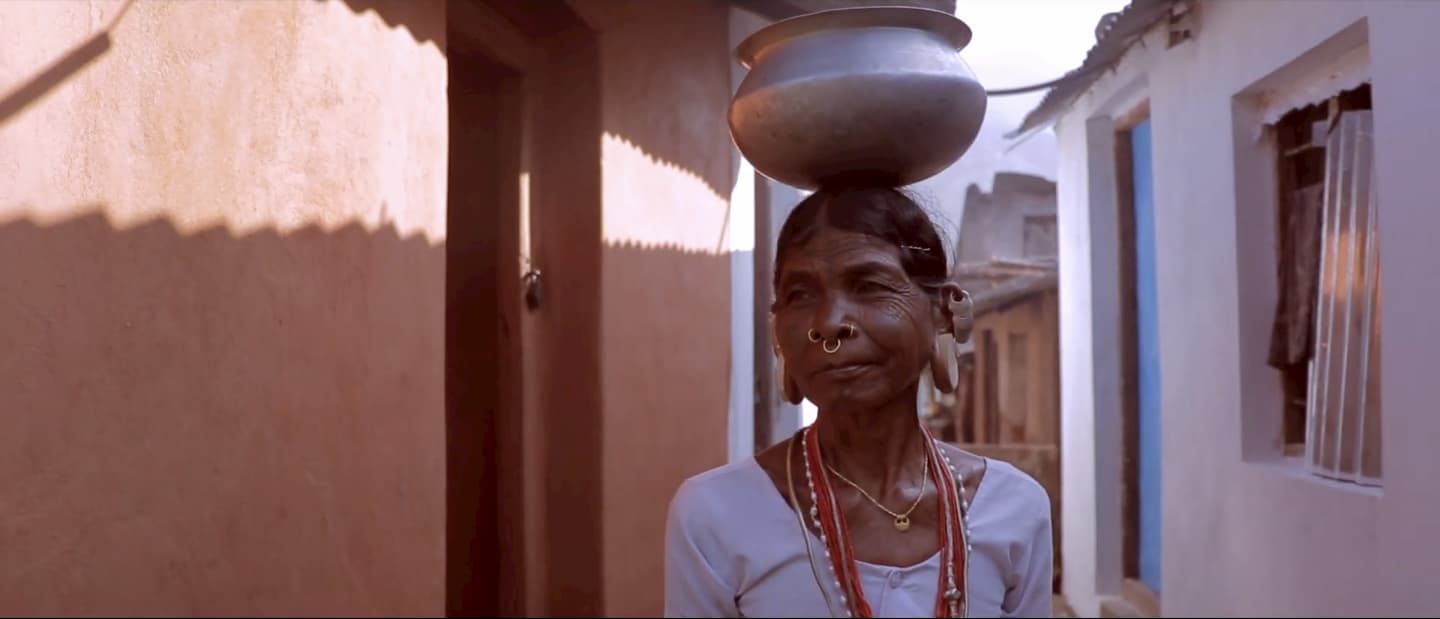


Ramani, a Lanjia Sora language speaker walking in her home in Rayagada district, Odisha, India. (Image by author, CC-BY-SA 4.0 License)

This post was first published at Yoti as a part of Subhashish Panigrahi's Digital Identity Fellowship. It has been edited for Global Voices.

The recent State of Aadhaar report that claims statistically that the Indian digital identity has mostly been beneficial with a negligible exclusion is in sync with the makers of the technology and largely the Indian government. However, perspectives reflected through interviews with marginalized communities and other stakeholder experts prove otherwise.

The report claims that 92 percent of the 167,000 surveyed people are “satisfied with Aadhaar’’ and 90 percent “trust that their data are safe in the Aadhaar system.’’

The report, however, did not address surveillance and risks to the right to privacy, which is crucial to the human rights and digital rights of India's population of 1.3 billion people (1.23 billion out of the total 1.3 billion people have enrolled for Aadhaar by 1 January 2020). The report was published by international consulting firm Dalberg Global Development Advisors with support from Omidyar Network.

The Indian government also often puts the state's national security above such individual rights, a concern that has recently been amplified with the ongoing discussions around the Personal Data Protection Bill of 2019 (read the proposed bill here) which can give the government agencies to access people's private data.

What is Aadhaar?

Aadhaar is a unique 12 digit number provided by a public organization Unique Identification Authority of India (UIDAI) that Indian residents can obtain by providing their biometric data and demographic data. Aadhaar is tied to a range of citizen beneficiary services, and logistical and technical issues have led to the exclusion of many marginalized communities. Similarly, the use of personal data in Aadhaar for authentication by public and private entities have raised serious human rights issues.

Unique Identity (UID) is used to tag Indian citizens with Aadhaar by centralizing a range of personal data (including biometric). Contrary to a popular misconception that Aadhaar is yet another “card” that provides the Indian citizens a form of identity, it is merely a number.
Research subjects

The 20 individuals — whose interviews form the basis for this report — are from communities that are marginalized on the basis of social and economic factors and are based in the Indian states of Odisha and Uttarakhand in four different locations. Five (33%) of the interviewees were women and two of those women were illiterate, whereas the male interviewees were all literate. Interviewees from Odisha were from two adivasi (indigenous) communities — Lanjia Sora and Jurai Sora, and the interviews from Uttarakhand were from low economic groups.

The other set of interviewees were key stakeholders including human rights lawyers and activists, litigators, ethnographers, and academic and other researchers.

Aadhaar, social benefits, and exclusion

As Aadhaar has been and is being linked to many citizen beneficiary services, authorities tend to use fingerprint scanning-based identification and authentication. Services like state pension or rations (food, fuels and so on) — or even subsidized healthcare — are received by individuals who are generally marginalized on the basis of age, literacy, access to public information in one’s own language, etc. Illness or manual labor can cause loss of or change in fingerprints which one might have to update periodically. Such a case can make a fingerprint-based authentication to fail.

‘‘For someone already part of a public system and already receiving their benefits, the complexity of getting everything connected through Aadhaar becomes burdensome,’’ shares a researcher-interviewee (who did not want to be named) who was studying the receipt of public benefits such as pensions and Public Distribution System (PDS), a federal government initiative to provide food and essential commodities to people in need with the objective of eradicating poverty) in rural Karnataka, Andhra Pradesh and Telangana. He adds, “people who do manual labor, or have an illness, or are in old age (or any of these combinations) often find their fingerprints are not detected or authenticated’’ while emphasizing how authentication using a mobile number or biometric (it has to be either in the case of Aadhaar) has many flaws, an issue researcher and human rights lawyer Dr. Usha Ramanathan and advocate Rahul Narayan also highlighted.

According to Dr. Ramanathan: “maintaining a valid mobile number or maintaining the same phone number used at the time of enrollment, failure of updating the number has led to exclusion’’ is a huge challenge, ‘‘the techno-utopians’’, the tech-savvy group behind Aadhaar – because of their own privileges, and lack of knowledge of ground reality – fail to understand.’’

Noted litigator Shyam Divan calls the Aadhaar system “dehumanizing’’ as it enables denial of rations to the poor over failure in fingerprint-based Aadhaar authentication. By November 2018, Right to Food Campaign activists in the Indian state of Jharkhand reported that 17 people had died in Jharkhand alone because of their failure to link their ration cards to Aadhaar – even though the State of Aadhaar report states that 80% of people feel that “Aadhaar has made PDS rations, MGNREGS schemes, or social pensions more reliable.” It is important to note that the failure, however small it might look in percentage terms, is massive in reality when you consider there are 1.3 billion people in India. “It took a year to get my Aadhaar card,’’ shares Manjula, a Lanjia Sora homemaker from the Gajapati district of Odisha who is in her early forties.

Unique, Ubiquitous and Universal: Features or systemic flaws

Former UIDAI chairman Nandan Nilekani who led Aadhaar's development in 2008-2009, detailed its three main pillars — Unique, Ubiquitous and Universal. Dr. Ramanathan, who was part of some of the discussions led by Nilekani was early to recognize that Aadhaar is not what it was designed for. He explained:

the “Unique’’ part was not to give a unique identity to every citizen but to use Aadhaar as a tool to identify them its “Ubiquitous’’ design was to link the records of every single resident of India that are scattered across databases
the “Universal’’ feature makes every person feel compelled to enroll for Aadhaar, even though enrollment is marketed as voluntary

“It was clear from the beginning that the people who would suffer the most are the poor. As an untested technology that is being imposed on people, the whole project was shot from the shoulders of the poor without knowing if such an ID would work or not. Aadhaar is not a card but a number attached to a biometric. If the biometric doesn’t work, the number doesn’t work,” Dr. Ramanathan added.

Rahul Narayan, a lawyer in the Indian Supreme Court, feels that Aadhaar's design has a striking and dangerous similarity to the governance structures Stalin or Hitler created. Narayan is frenzied by the idea of accumulating personal data collected by public and private services using Aadhaar.

Access to information

Lack of access to information surfaced as a huge marginalization factor in the field interviews. Ramani, a 70-year-old Jurai Sora lady from the Rayagada district of Odisha recounts how she and other illiterate folks from her village suffered during Aadhaar enrollment. They relied on bilingual officials and others for help in translation. “Public announcements are made by Endia,’’(originated from “India”, refers here to a bilingual person who brings public announcements to the people) shares Dinabandhu, an elderly Lanjia Sora male.

In a country with over 700 languages (only 22 are officially recognized) and a 74.8 percent literacy rate, only about 12 languages are used in the official implementation of Aadhaar. The claim of 92 percent of Aadhaar holders being satisfied with it and 90 percent of them trust that their data is safe with the government in State of Aadhaar seems highly ambitious and impractical.

Despite huge efforts to make Aadhaar the go-to ID verification for many public and private services, Section 9 of the Aadhaar Act 2016 – which addresses the use of authentication as a proof of citizenship and domicile – was called “unconstitutional” in an Indian Supreme Court verdict issued in December 2019. Many communities during these interviews were happy to have an Aadhaar “card’’ to themselves as an entitlement, and they now failed to imagine their lives without one.


Sunday, February 16, 2020

14396 - Protecting privacy must for safeguarding liberty: Legal experts at Goa meet -Usha Ramanathan-Outlook India

15 FEBRUARY 2020 
 SOURCE: PTI

Protecting privacy must for safeguarding liberty: Legal experts at Goa meet

Panaji, Feb 15 (PTI) There are certain red lines where right to privacy cannot be breached, legal experts said on Saturday as they stressed that protecting privacy is must for safeguarding one''s liberty.

They were also of the opinion that the Supreme Court judgment making Aadhaar mandatory for disbursement of benefits and subsidies failed to achieve much.

The entire Aadhaar database is based on self-certification as people can change their personal information online and no one verifies it, senior Supreme Court advocate Shyam Diwan said.

"We cannot allow India to become a surveillance state. A surveillance society is completely antithetical to the working and functioning of a democracy," said Diwan, who was one of the lawyers who represented the petitioners before a 9-member bench of the apex court on right to privacy as a fundamental right.

He was speaking on "After the Aadhar judgement: Do individuals have right to privacy" on the second day of Difficult Dialogues, an annual forum that examines issues of contemporary relevance in South Asia, at the International Centre Goa here.

He said "we are creating a database that is of very little value".

He added, "If you want to protect your liberty, you have to protect your privacy. Understanding of privacy after this judgment is very serious."

Legal researcher and Aadhaar critic Usha Ramanathan argued that the battle is not that "my neighbour will know something about me or not, it is about preserving ourselves from this kind of invasion".

She claimed there are many problems with Aadhaar, such as biometric verification, cards being bought and sold, and a frightening number of data leaks from a huge number of government departments.

What has got completely sullied in the last 10 years is who has to be transparent and to whom, she said.

"In these years we have been told that people are corrupt, people do wrong and they will be watched every time. But if you look at first 10 years of the century, it is the politicians, bureaucrats who were involved in major scams and the sufferers are the people," she claimed.

On RTI, she said the law was to make the government transparent to the people but it is making the people transparent to the state.

Arghya Sengupta, research director of a legal think-tank based in Delhi, said, "The understanding of what extent of invasion of privacy is permissible is something we as individuals have to ask us. We need to be careful as to not make privacy on such a pedestal that it is over and above our fundamental rights," he pointed.

The courts are not meant to answer pure questions of law, they are meant to apply the law to the facts, he said.

On the privacy of health data, Sengupta said, "Health information is sensitive according to the law and can be shared only with the explicit consent of the individual. It is a different matter that the state is abusing its understanding of privacy to derive information."

The Supreme Court in September 2018 declared the Aadhaar scheme constitutionally valid, while striking down some of its provisions, including its linking with bank accounts, mobile phones and school admissions. PTI DPB ZMN

Disclaimer :- This story has not been edited by Outlook staff and is auto-generated from news agency feeds. Source: PTI

Tuesday, December 17, 2019

14336 - ‘Aadhar is a national security threa - Usha Ram,anthan

‘Aadhar is a national security threat‘

Posted by SDD Contributor on December 16, 2019 at 7:58 pm


‘The government that is talking all the time about national security and national interests should be concerned.‘

‘When national interests are jeopardised by their own project, they should pause and listen.‘

‘Whether it is the BJP or the Congress, they all want control over the people.‘

‘They don‘t give a damn if anything happens to the people of the country; they are only interested in what they can get out of the data.‘

Dr Usha Ramanathan, an independent legal researcher, has been writing, campaigning and debating the social, legal and economic aspects of the Aadhar card project from 2009 onwards.
Dr Ramanathan, below, left, tells ‘s Shobha Warrier why Aadhar is not going to help India or its people in any way, rather how it is a security threat.

You have been a strong critic of the Aadhar card from the time it was introduced by the Manmohan Singh government. The way the Narendra Modi government is making it an all-encompassing identity card, do the people of India have to be worried?

You have to remember that this is not just a project of the government; it is a project of corporate interests which is working with and through the government.

Increasingly, it has become clear that this isn‘t just about India, the Indian government and the Indian State.

We now know that the curiosity of the American establishment is very high in what is happening in various parts of the world.

We also know that with the kind of economic development that is happening, there are many countries that are interested in India, interested in the various kinds of data points which would help them decide where they want to intervene and where they don‘t want to.

From what‘s happening around the world, we know that the curiosity is more than we can tolerate.

We also know that the UPA (Dr Singh‘s United Progressive Alliance) government wanted us to believe that they were at least dealing with terrorism.

We have been saying from the beginning that when you are creating a data base of this kind of the entire population, it is a national security threat.

I don‘t understand how the government does not see it.

We had breaches happening to data bases all over the place.

The craziness of the data base is that they say you put the number in every data base, which is what the corporates want.

They want to make data out of all of us.

‘Data is the new oil and corporates want to be in total control of the whole pipeline of data.‘

They are asking us to put three numbers everywhere: Bank account number, UID number and mobile number.

These are the ways you identify yourself in various places and now you make that completely insecure because it‘s all over the place.

Now they want to put biometrics also everywhere. So, it‘s a system without a system.

Nandan Nilekani, then the chairman of the Unique Identity Authority of India, had said it was an identity platform, but now it has become an identity itself

It was never meant to be an identity. It was meant to be an identity platform and he doesn‘t care what happens to the identity of the person.

He just wants numbers that can track various kinds of data which they are interested in.

That‘s why Nilekani says privacy is not an issue, surveillance is not an issue, and India, from being a data poor country is becoming a data rich country.

What he says will happen because everybody will have to leave their digital footprints in different places for different service providers, and that‘s his plan.

His is a complete corporate plan where data is the new oil and he wants to be in total control of the whole pipeline of the data.

When Aadhar was first introduced Nilekani had said that biometric data would not be given to anybody. Now, even a private telephone company is using the same biometrics to identify you.
How dangerous is it going to be?


First of all, you have to understand that Nilekani has been misinforming throughout.

‘If you are a woman rescued from prostitution and rehabilitated, they ask her to give her UID number which is completely contradictory because the first thing such a rehabilitation needs is anonymity.‘

For instance, he says UIDAI does not give biometric information as it does not have much information, so it‘s not unsafe.

Yes, UIDAI might not give biometric information, but in the process of accessing their authentication service, they are handing over to people whatever is in their data base.

Now they are using biometrics to be the authenticator by all kinds of people which means you have no control over it.

There is no monitoring system to verify that they are not retaining the biometric, there is no monitoring system to ensure that the consent is being got. Nothing.

The only conclusion I can draw is that they don‘t give a damn if anything happens to the people of the country; they are only interested in what they can get out of the data.

Is it necessary for every citizen of a country to have a unique ID number?
If you look at the various uses for which they are going to put it, we see two kinds of users.

One is, private companies want to use it so that they KYC will become simpler.

By creating such a data base with so much resources, putting all people at risk so that your KYC becomes simpler is completely disproportionate to my mind.

Then they say the government will be able to deliver services, but if you see, so far they have used it only to cut people out of services and not to deliver services.

If you look at all the notifications that are coming now, it is impossible to understand what possible purpose there can be.

For example, if you are going to have a toilet in your house and they are going to give money for that, you have to give your UID number before you get the money.

If you are a Bhopal gas victim from 1984 and for rehabilitation, today you have to give your UID number, or else, you get dis-entitled for rehabilitation.

If you are a woman rescued from prostitution and rehabilitated, they ask her to give her UID number which is completely contradictory because the first thing such a rehabilitation needs is anonymity.

When a manual scavenger is rehabilitated, he doesn‘t want to carry the identity with him. But it appears nobody cares.

They only want you to have a UID number and put it on every data base.

It‘s one way of coercing people to enrol for this. That‘s contrary to the orders of the court, but it appears the government doesn‘t give a damn what the court is saying or anybody‘s saying or what even their own lawyers are saying.

Even the law says only two kinds of use is possible; one is authentication which means you give a fingerprint, but nobody can retain the data but that‘s not what is happening.

‘The HRD ministry says they can give the data of children to employers later.

Are they going to give information to an employer what a child went through on his way to adulthood?‘

The second thing is, they have added e-KYC, an app created on the platform to give information which is against what they said when it was created.

The most important thing is, they are asking us to put the number in every database.

Show me the provision in the law that allows them to do so.

The law says you cannot retain the information. They don‘t have a provision which says you can ask for the number anywhere.

Actually it is contrary to the law the government itself has made in a hurried way calling it a Money Bill.

Forget about the court, they are breaking their own law.


Is it not in a way intruding into the lives of people?
Obviously. If you are a Bhopal gas victim, or a prostitute or a manual scavenger, you are able to track them and this is something that intrudes into the lives of people.

The HRD ministry said they are going to put the UID number with the school from the time the child enters school till he leaves.

Sociologically this is the age they pass through many conflicts and problems in life and emerge into adulthood.

Now, they are saying they would add the number to everything.

The HRD ministry says they can give the data (of children) to employers later. Are they going to give information to an employer what a child went through on his way to adulthood? Who is this employer?

Like you said earlier, is it like the corporates and the market matter more than the individuals?
For people like Nilekani, they are only interested in the market as they want to have more start-ups and they want to outsource. This is the only agenda they know.

For the government, they have found a convenient tool to put people under surveillance and tracking people across time and activities.

Why is the Bill Gates Foundation coming and sitting with the RBI every day asking them to make everything cashless?

And they have not tested any of these systems and wherever they have tested, the system has failed. But they are refusing to say what the tests have shown.

To me, there seems to be concerted plan to attack our various systems and one of the central systems is the monetary system.
We see a lot of irresponsibility here.

Nilekani and his people create whatever apps they want and they say they evangelise them to the government.

The government is not listening to other people, calling us anti-UIDAI.

This is not about anti-UIDAI; this is a stupid system.

In 2010, we had said, please pause before you carry on. Get the feasibility report done as this is what we anticipate.

Now what we had anticipated has happened; coercion, illegality and exclusion.

When you give it to companies of all kinds, it becomes a national security threat too.

The government that is talking all the time about national security and national interests should be concerned.

Who is Paytm? Why do we have to reveal everything, all our financial transactions to Paytm?

‘You created multiple electronic data bases. Do you think other countries are not going to dig into this?‘

The idea that people are irrelevant and relevant only as data points will lead us down to very dangerous paths.

How is it useful for the government to expose every single person?

What does the government want?

If the government wants to administer, this is not the way to do it.

If the government wants to track and profile people, this can, to quite an extent, be a good surveillance.

But the government has to be concerned about national security and national interests.

When national interests are jeopardised by their own project, they should pause and listen.

You have created multiple electronic data bases now. Do you think other countries are not going to dig into this? How can they be so naïve?

They said UIDAI numbers were issued to 80 crore people and 8 crore enrolments were rejected, which is 10 per cent of the enrolment.

When we asked why they were rejected, they said there were duplicates. But they do not know how many were duplicates and for what other reasons they were rejected.

They were not bothered to go back and check.

‘There is no comparison between the US social security number and Aadhar.‘
‘In the US, the social security number is linked to social security, but here this ID is linked to all and sundry; from the mid-day meal scheme to everything.‘

You ask the biometric experts, they would say it won‘t take much time to create fake numbers. The enrolment is done by some agency, not even monitored well.

Creating multiple fake identities is so easy in this process.

What is the value of something when 30 per cent people in Rajasthan cannot get ration because their fingerprints are not there?
I can understand Nilekani being irresponsible because for him, he only wants to control this as it is a corporate interest. But how can the government be doing this?

The supporters of the unique number say that in countries like the US, there is a unique ID number for everyone and they ask, why is it that in India people want to criticise it…

First of all, what the US has is a social security number and there is no comparison between the US social security number and this (the way the government want to use the Aadhar ID).

In the US, the social security number is linked to social security, but here this ID is linked to all and sundry; from the mid-day meal scheme to everything.

‘If you look at the past 15 years, where have all the scams happened? Within the government and between the governments and corporates. But they want to check us and see whether we are corrupt or not.‘

Here, the State is saying, ‘if I give you something, if I pay you a salary, you are the beneficiary of the State, and therefore, you have to be subservient to the State.‘

It‘s demeaning for a population.

In the US, they will allow it to be used only for limited purposes and they advise you not to use it everywhere.

They have the privacy law, the non-discrimination law and they have a system by which you can complain if you have a problem. And it‘s not based on biometrics.

Now that the government plans to connect all the details of a person like income tax, driving license, etc to the Aadhar card, do you feel it‘s going to be like Big Brother watching us all?

Obviously. What does the government say? All of you are corrupt unless you prove otherwise.

They even say they will cancel you PAN card if you don‘t have an Aadhar card. How absurd is that?

‘There is an ambition in the government that everyone should be in every data base to be completely visible to the State.
That is the biggest threat to the democracy you can have.‘

If you look at the past 15 years, where have all the scams happened? Within the government and between the governments and corporates. But they want to check us and see whether we are corrupt or not.

This has nothing to do with corruption, efficiency, inclusiveness, etc. All these myths are busted by now.

Why do you have a Constitution?
Because you want to recognise your rights and you want the State to be restrained.

It‘s not about making the State all powerful; it‘s about controlling the power of the State.

Now the State says, I am above the law and I will do whatever I want.

If you want to be recognised as a human being in this territory, you better do what I ask you to do.

They have the power to disable and omit any number.

The Manmohan Singh government started it with the intention of cutting down on subsidies because the World Bank was asking them to cut it down to the maximum.

This government which in Opposition wanted the project to be dropped because it was insecure, is going on with it.

‘The court has to understand that people depend upon the court to protect them from the absolute power of the State.‘
‘If the court abandons that role, people will have to find other means which is not a good thing.‘

They said the first thing they would do when they come to power would be to scrap the project.

After they came to power, they want power over people.

It‘s tragic that two governments that follow different ideologies, are doing the same.

This is like keeping the RTI upside down.

RTI was about the State visible to people, but this is about making people visible to the State.

There is an ambition in the government that everyone should be in every data base to be completely visible to the State.

That is the biggest threat to the democracy you can have.

That is Big Brother watching…

Yes, Big Brother watching.

The State has the power and not the people.

People have to worry about the State having too much power.

This is a clear case of moving towards absolute power with the State.

The State wants each individual to come and prove at regular intervals that s/he is not corrupt.

It is like, I as the State need to see you whenever I want to.

When in power, whether it is the BJP or the Congress, they all want control over the people.

It is the job of the court to see that they don‘t get the control over people.

Because this is not an anarchic country; the government is taking advantage of it.

The court also has to realise that the State is not the protector of civil liberties; it is the court.

Our fundamental rights are not protected by the State, but by the court.

The court has to understand that people depend upon the court to protect them from the absolute power of the State.

If the court abandons that role, people will have to find other means which is not a good thing.


Friday, October 4, 2019

14277 - For Many Indians, the Right to Sanitation Is Coming at the Cost of Other Human Rights by Usha Ramanathan - The Wire

For Many Indians, the Right to Sanitation Is Coming at the Cost of Other Human Rights


It should be axiomatic that one human right ought not to be realised by violating other human rights. Yet, the Indian experience tells us that that is not as obvious as it may seem.


Photo: Reuters/Files

Usha Ramanathan

01/OCT/2019

Last week, on September 25, two young Dalit children were beaten to death in Shivpuri, Madhya Pradesh for defecating in the open. This isn’t the first time the idea of “cleanliness” and the right to sanitation have in fact enforced prejudice – based on caste and class – and resulted in violence, even killing. In this excerpt from Usha Ramanathan’s Foreword to The Right to Sanitation in India, she talks about that link.

The century turned, and another human right gained recognition. In its early years, sanitation found honourable mention in the United Nations General Comment No. 15 along with the right to water, which underlined that “[o]ver one billion persons lack access to a basic water supply, while several billion do not have access to adequate sanitation, which is the primary cause of water contamination and diseases linked to water”. At that point, sanitation was largely seen through the potential of faeces to contaminate water. In the decade that followed, the human right to sanitation found itself in the interstices of the right to health, the right to adequate housing, and the right to an adequate standard of living, alongside the right to water.

There are few who would doubt the value of safe, accessible and hygienic sanitation. There has been too much silence around sanitation, and for far too long. Progressive recognition of this right in the international arena has acted as a prompt for states to place sanitation squarely on their agenda. In India, the recognition of the importance of sanitation started earlier, in 1999, with the Total Sanitation Campaign – renamed the Nirmal Bharat Abhiyan – with the goal of ending open defecation by 2017. In 2014, when a new government was installed at the Centre after the general election, among its early interventions in public policy was the Swachh Bharat Mission (Clean India Campaign). The pressure has been building up since then, with the prime minister personally putting his heft behind the campaign, with reward and punishment pursuing statistics around an acronym minted in the 2000s: ODF (Open Defecation Free).

It should be axiomatic that one human right ought not to be realised by violating other human rights. Yet, the Indian experience tells us that that is not as obvious as it may seem.

Also read: What the MP Children’s Murders Tell Us About Caste and Cleanliness

The first public shock about the calamitous effect of prejudice in the context of sanitation is recorded in a 1996 report of the People’s Union for Democratic Rights (PUDR)-Delhi. Dilip, a 19-year-old young man visiting Delhi to witness the Republic Day celebrations in January 1995, was “beaten, kicked and forced to run around and squat by constables of Delhi police. Dilip collapsed and died on the spot”. The provocation: that he was from a nearby slum and appeared to have used the park to defecate. In the ensuing conflict that erupted when the police attempted to remove Dilip’s body, and irate slum dwellers resisted, the police fired, immediately killing three, one more person died subsequently, 16 were injured and 123 arrested.

In interviews to the press, the additional commissioner of police defended the firing as an “inevitable and necessary intervention in a conflict between the ‘haves’ (the residents of Ashok Vihar – a residential colony) and the ‘have-nots’ (the jhuggi dwellers) – sooner or later this had to happen”. The police position on this episode was summed up in the report as follows:

Slums have grown in Delhi;
It is not possible to provide amenities to slum dwellers;
Therefore, tensions are a necessary result;
The police is not responsible for such a situation;
But they are forced to intervene to preserve law and order.


The Right to Sanitation in India: Critical Perspectives
Edited by Philippe Cullet, Sujith Koonan, and Lovleen Bhullar
Oxford University Press, 2019

The PUDR report sets out a telling statistic:

“…the Slum Wing provides one tap for every hundred jhuggis and one toilet seat for every 25 jhuggis. It admits that one toilet seat ought to be provided for every 7 jhuggis. However, in Shaheed Sukhdev Nagar there are no toilets, for roughly 5,000 families. The Slum Wing cites a combination of factors as ‘cause’ including ‘a lack of space and the reluctance of the railways.”

This incident is teeming with multiple violations of human rights – to dignity and safety while doing what must be done; police brutality; arrest and detention; and the taking away of life itself.

Also read: Even If Data Is Legit, Swachh Bharat Will Have Failed Its Open Defecation Goal

Recent years have seen a return of this attitude of intolerance, accompanied by public shaming, exclusion and punishment. The focus has moved away from dignity to shame, and from provision to punishment. Consider these representative incidents:

On June 17, 2017, newspapers reported that a man had been beaten to death by municipal council employees when “he tried to stop them from clicking photographs of women defecating in the open. He was allegedly kicked, punched and beaten with a stick. He died later at a hospital”. This happened when the officials were on their morning tour of the area.

The cruelty takes different forms. In October 2017, an IAS officer in Maharashtra reportedly “garlanded and felicitated” two women labourers while they were returning from defecating in the open. He then sent the pictures to the media. The state government ignored demands for action against the officer.

The state has acquired a reputation for adopting extreme measures in its keenness to end open defecation. Earlier in the year, the state government of Maharashtra set up what were called ‘Good Morning Squads’ to spot and crack down on those defecating in the open. As a squad member explained to the reporter: “it is necessary to create fear among people relieving themselves in the open. But we normally have to just shout or whistle to get people to run away”.

Public shaming, punishing, threatening and inducing fear have become part of state practice in ridding itself of what it sees as the shame of open defecation. Others imitate these tactics. 

So, a TV channel started the following campaign: Name and Shame Campaign; #EndOpenDefecation; Blow the Whistle on Open Defecation; Send in pictures at …

A shift has been made from the human right to sanitation to the state’s sense of shame and ambition to erase open defecation. The lawless lengths which may be reached is evident from newspaper reports which list ways in which punishment is meted out, such as in the case of the state of Rajasthan where:

Six villagers were arrested in Bhilwara for defecating in the open;

Subsidised grains were denied under the public distribution system (PDS) to families without toilets in Jhalawar district;
In Jahazpur sub-division of Bhilwara district, power supply was disconnected in a village where only 19 percent of households had toilets; and

In Karauli, women teachers were asked to mark attendance from the field by clicking selfies while they prevented villagers, men and women, from defecating in the open.

In Puducherry, Lt Governor Kiran Bedi tweeted that subsidised rice in the PDS would be given only in villages certified to be ODF. Public outrage caused her to backtrack swiftly, while making a pitch for “cleanliness”.

This idea of the ‘clean’ has shifted the focus from the concerns of those below the poverty line to the priorities and prejudices of those wielding power. Law supports none of these actions. Quite to the contrary, the National Food Security Act, 2013 creates statutory entitlements to food, which are thwarted by the imposition of these unsanctioned penalties. Even arrest and detention have been taken out of the idea of the rule of law.

Usha Ramanathan is a legal researcher.

#Grit is an initiative of The Wire dedicated to the coverage of manual scavenging and sanitation and their linkages with caste, gender, policy and apathy.

Friday, July 26, 2019

14210 - Biometrics disenfranchising a large number of citizens: Activists - National Herald

Biometrics disenfranchising a large number of citizens: Activists

A petition has reached the Delhi HC and has asked the Election Commission to consider a plea for an Aadhaar-based voting system, in response to a PIL filed by BJP member Ashwini Kumar Upadhyay

Photo Courtesy: NH
Photo Courtesy: NH
NH Web Desk

NH Web Desk

“UIDAI is not verified and even the card has no authorised signatory on it. This means there will be multiple people who do not exist on the database. UIDAI doesn’t need a person to be present,” highlights Usha Ramanathan.
“Now a BJP-affiliated lawyer has gone to court to ask for linking of Aadhaar with voter id. I don’t think the Courts have the jurisdiction to do this. The court’s job in all these cases is to preserve and protect the fundamental rights of the people and convenience and efficiency is no reason to act. This is being done under a Public Interest Litigation, which is not for state power to be asserted over people,” points out Usha Ramanathan, who was speaking in the Capital against a PIL filed in the Delhi High Court asking the Election Commission to link the voter id with the Aadhaar.
The ECI’s 2015 National Electoral Roll Purification and Authentication Programme (NERPAP) which involved linking Aadhaar with voter IDs resulted in deletion of nearly 55 lakh voters in Andhra Pradesh and Telangana. “Biometrics is disenfranchising a large number of people,” added Ramanathan.
A petition has reached the Delhi HC has asked the Election Commission of India (ECI), to consider a plea for an Aadhaar-based voting system, in response to a PIL filed by BJP member Ashwini Kumar Upadhyay. On July 16, the Delhi High Court directed the EC to respond in eight weeks.
“We must protest this PIL. This is a regressive step and will make it even more difficult for the citizens to vote. There are several deletions in the electoral rolls,” pointed out Prasanna, a lawyer who hopes to intervene in this case. He adds that the case must be dismissed.
“Two former election Commissioners have said that UIDAI has lobbied long and hard to link voter Id with Aadhaar as a way to legitimise the controversial biometric project and not to improve electoral rolls, says Jagdeep Chhokar, founder-member of Association of Democratic Reforms.
“Aadhaar and voter id are two different modes of identification and the two must not be confused as the former doesn’t define citizenship, but voter id does,” underscores Raghu, who works with Rethink Aadhaar.
“Aadhaar has become a hobby horse. It was earlier the hobby horse of one person and now it is the hobby horse of the government. People are being seduced by technology. They don’t understand that technology is only the means and not the end. You cannot deliver services over the net,” adds Chhokar.
Pointing towards a report on Aadhaar, Raghu said, “even the Omidiyar Network’s state of Aadhaar report points out that self-reported data errors in Aadhaar data is 1.5 times more than similar errors in electoral rolls. If linked, it will create even more errors in the electoral rolls.
This issue assumes even more significance in the light of a letter recently written by the Chief Minister of Maharashtra to the ECI recommending the linkage of Aadhaar with voter IDs.
The petition proposes an e-voting system using fingerprint and face biometric” and, for that purpose, linking of Aadhaar number with voter ID. Such a system, the petition claims, will lead to an increase in voting percentage while also preventing bogus or fraudulent voting.
For all the latest India News, Follow India Section.

Thursday, June 13, 2019

14167 - Aadhaar Activist Usha Ramanathan Declared ‘Human Rights Hero’ - She the People.TV


Tuesday, June 11, 2019

14165 - Aadhaar Critic Usha Ramanathan Gets ‘Human Rights Hero’ Award = The Quint


Usha Ramanthan, a legal researcher and an activist based in New Delhi, has been declared a ‘human rights hero’ by Access Now. (Photo Courtesy: YouTube)

Aadhaar Critic Usha Ramanathan Gets ‘Human Rights Hero’ Award
THE QUINT
14H 22M AGO

INDIA2 min read

1.1k ENGAGEMENT

Usha Ramanthan, a legal researcher and an activist based in New Delhi, has been declared a ‘human rights hero’ by Access Now, an international digital rights organisation, for her criticism of the Aadhaar programme, a bio-metric identification system where a 12-digit unique number that can be obtained by residents of India based on their bio-metric and demographic data.

She will receive the award this week from United Nations High Commissioner for Human Rights Michelle Bachelet at Access Now’s annual event RightsCon, to be held in Tunis from 11 June to 14 June. RightsCon is a human rights and technology conference.

While announcing the award Access Now said:

“Dr Ramanathan is one of the leading critics of Aadhaar who has, since 2009, tirelessly challenged the controversial Aadhaar digital identity program in India, objecting to both the privacy and the security risks.”

Also Read : No Mid-day Meals For Children Without Aadhar Cards, HRD Min Rules

They applauded her continuous effort against Aadhaar and her explanation of the ramifications of the 2018 Supreme Court judgement on Aadhar policy in India. In September 2018, the Supreme Court in India ruled Aadhaar could not be mandatory for several purposes, and it will not be required by private companies.

‘Tireless Efforts to Highlight Issues With Aadhaar’

Ramanathan has written and spoken extensively against Aadhaar. She has addressed issues with privacy, security and exclusionary risks of the bio-metric identity scheme.

Other than Ramanathan, there are a total of 4 winners this year for their 2018 Heroes category. Access Now also has another category of awards called 2018 Villains who unlike the heroes, have worked to undermine the principles of online freedom.

(With Inputs from The Wire and Scroll)

Also Read : Can Extend 31 March Deadline for Aadhar Linking: Centre to SC

(The Quint is now available on Telegram. For handpicked stories every day, subscribe to ourTelegram and WhatsApp channels)

14164 - Activist Usha Ramanathan Named Human Rights Hero For Campaign Against Aadhaar - Logical Indian

Activist Usha Ramanathan Named Human Rights Hero For Campaign Against Aadhaar

The Logical Indian CrewIndia
June 10th, 2019 / 6:27 PM / Updated 15 hours ago
Usha Ramanathan Award
Image Credit: Moneylife
International rights group Access Now has declared Usha Ramanathan, a legal researcher and activist based out of Delhi, a ‘human rights hero’. Since 2009, the time when the Aadhaar program was launched, Ramanathan has been staunchly raising the security and privacy risks associated with it.
Access Now, speaking about the award, said, “In celebration of…the work of people around the globe to protect human rights in the digital age, every year Access Now names ‘heroes’ and ‘villains’ who have either protected the principles of freedom online or worked to undermine them.”
Appreciating Ramanathan’s work, Access Now said that since 2009, she has been tirelessly challenging the ‘controversial Aadhaar digital identity program in India’, speaking of its privacy and security risks. “Dr Ramanathan worked to explain the ramifications of the judgement (where SC ruled that Aadhaar could not be made mandatory for several purposes) and its disappointing limitations, She continues to speak against the Aadhaar program.”
The statement from Access Now further said that this award also recognises the entire community that had protested the risks associated with Aadhaar.
Apart from Ramanathan, there are other four winners, which includes Bahraini activist and digital security consultant Mohammed Al-Maskati; Australian human rights lawyer and writer Lizzie O’Shea; Tanzanian digital security trainer Zaituni Njovu; and Venezuelan lawyer, writer and human rights activist Marianne Diaz Hernandez.

Validity of Aadhaar
A five-judge Supreme Court bench on September 26, 2018, upheld the constitutional validity of Aadhaar, however, it struck down multiple sections of the Aadhaar Act as unconstitutional. Justice AK Sikri while reading the judgement said, “Aadhaar gives dignity to the marginalised. Dignity to the marginalised outweighs privacy.” He also observed that Aadhaar fails only  0.232% and dismantling it now would mean disturbing 99% of the population who have already been enrolled.
A bill was introduced in the Lok Sabha on January 2, 2019, by the Narendra Modi government to amend various laws in the Aadhaar bill in a move to curtail the biometric authentication programme of the country. The bill seeks to allow people to offer voluntarily biometric ID, Aadhaar as a means of availing certain services like opening a bank account or getting a new phone connection. It also gives a child an option to opt out of the scheme upon attaining the age of 18 years, reported The Economic Times.
The Aadhaar And Other Laws (Amendment) Bill 2018 has amendments that have to be passed in order to comply with the aspects of the judgements of the Supreme Court. The bill was passed two weeks ago by the cabinet, and information technology minister Ravi Shankar Prasad introduced it in the Lok Sabha.


Contributors
Written by : Shraddha Goled
Edited by : Bharat Nayak

14163 - Access Now Calls Usha Ramanathan 'Human Rights Hero' for Opposition to Aadhaar - the Wire

Access Now Calls Usha Ramanathan 'Human Rights Hero' for Opposition to Aadhaar

While facilitating Ramanathan's "tireless" efforts to highlight the issues related to Aadhaar, Access Now has said that it also wants to "recognise the entire community that has protested and litigated against Aadhaar".
New Delhi: Usha Ramanathan, a legal researcher and activist based in Delhi, has been declared a ‘human rights hero’ by international rights group Access Now for her criticism of the Aadhaar programme. Since the scheme was launched in 2009, Ramanathan has been raising the security and privacy risks associated with it, as well as the concerns on linking the programme to welfare schemes.
While facilitating Ramanathan’s “tireless” efforts to highlight the issues related to Aadhaar, Access Now has said that it also wants to “recognise the entire community that has protested and litigated against Aadhaar”.
The award function will be held in Tunis between June 11 and 14, as a part of RightsCon. The awards will be handed out by Michelle Bachelet, the United Nations high commissioner for human rights.
Describing the award, Access Now says, “In celebration of…the work of people around the globe to protect human rights in the digital age, every year Access Now names “heroes” and “villains” who have either protected the principles of freedom online, or worked to undermine them.”
There are a total of five winners this year. Other than Ramanathan, Bahraini activist and digital security consultant Mohammed Al-Maskati, Australian human rights lawyer, broadcaster and writer Lizzie O’Shea, Tanzanian digital security trainer Zaituni Njovu and Venezuelan lawyer, writer and human rights activist Marianne Díaz Hernández have also been designated ‘heroes’.
In September 2018, the Indian Supreme Court upheld the validity of the Aadhaar law, but placed strict restrictions on its scope. Before the final judgment, the court had passed a number of orders which were conveniently ignored by the administration, Ramanathan and others have pointed out.
Ramanathan has written a number of articles on why the programme needs to be rebooted, and the risks it poses to people’s privacy. A number of her articles have been published in The Wire.
You can read The Wire‘s full coverage of the Aadhaar programme here.