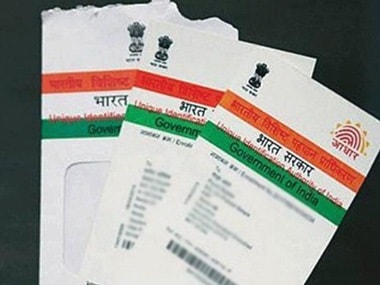
In 2009, I became extremely concerned with the concept of Unique Identity for various reasons. Connected with many like minded highly educated people who were all concerned.
On 18th May 2010, I started this Blog to capture anything and everything I came across on the topic. This blog with its million hits is a testament to my concerns about loss of privacy and fear of the ID being misused and possible Criminal activities it could lead to.
In 2017 the Supreme Court of India gave its verdict after one of the longest hearings on any issue. I did my bit and appealed to the Supreme Court Judges too through an On Line Petition.
In 2019 the Aadhaar Legislation has been revised and passed by the two houses of the Parliament of India making it Legal. I am no Legal Eagle so my Opinion carries no weight except with people opposed to the very concept.
In 2019, this Blog now just captures on a Daily Basis list of Articles Published on anything to do with Aadhaar as obtained from Daily Google Searches and nothing more. Cannot burn the midnight candle any longer.
"In Matters of Conscience, the Law of Majority has no place"- Mahatma Gandhi
Ram Krishnaswamy
Sydney, Australia.

Aadhaar

The UIDAI has taken two successive governments in India and the entire world for a ride. It identifies nothing. It is not unique. The entire UID data has never been verified and audited. The UID cannot be used for governance, financial databases or anything. It’s use is the biggest threat to national security since independence. – Anupam Saraph 2018

When I opposed Aadhaar in 2010 , I was called a BJP stooge. In 2016 I am still opposing Aadhaar for the same reasons and I am told I am a Congress die hard. No one wants to see why I oppose Aadhaar as it is too difficult. Plus Aadhaar is FREE so why not get one ? Ram Krishnaswamy

First they ignore you, then they laugh at you, then they fight you, then you win.-Mahatma Gandhi

In matters of conscience, the law of the majority has no place.Mahatma Gandhi

“The invasion of privacy is of no consequence because privacy is not a fundamental right and has no meaning under Article 21. The right to privacy is not a guaranteed under the constitution, because privacy is not a fundamental right.” Article 21 of the Indian constitution refers to the right to life and liberty -Attorney General Mukul Rohatgi

“There is merit in the complaints. You are unwittingly allowing snooping, harassment and commercial exploitation. The information about an individual obtained by the UIDAI while issuing an Aadhaar card shall not be used for any other purpose, save as above, except as may be directed by a court for the purpose of criminal investigation.”-A three judge bench headed by Justice J Chelameswar said in an interim order.

Legal scholar Usha Ramanathan describes UID as an inverse of sunshine laws like the Right to Information. While the RTI makes the state transparent to the citizen, the UID does the inverse: it makes the citizen transparent to the state, she says.

Good idea gone bad
I have written earlier that UID/Aadhaar was a poorly designed, unreliable and expensive solution to the really good idea of providing national identification for over a billion Indians. My petition contends that UID in its current form violates the right to privacy of a citizen, guaranteed under Article 21 of the Constitution. This is because sensitive biometric and demographic information of citizens are with enrolment agencies, registrars and sub-registrars who have no legal liability for any misuse of this data. This petition has opened up the larger discussion on privacy rights for Indians. The current Article 21 interpretation by the Supreme Court was done decades ago, before the advent of internet and today’s technology and all the new privacy challenges that have arisen as a consequence.

Rajeev Chandrasekhar, MP Rajya Sabha

“What is Aadhaar? There is enormous confusion. That Aadhaar will identify people who are entitled for subsidy. No. Aadhaar doesn’t determine who is eligible and who isn’t,” Jairam Ramesh

But Aadhaar has been mythologised during the previous government by its creators into some technology super force that will transform governance in a miraculous manner. I even read an article recently that compared Aadhaar to some revolution and quoted a 1930s historian, Will Durant.Rajeev Chandrasekhar, Rajya Sabha MP

“I know you will say that it is not mandatory. But, it is compulsorily mandatorily voluntary,” Jairam Ramesh, Rajya Saba April 2017.

August 24, 2017: The nine-judge Constitution Bench rules that right to privacy is “intrinsic to life and liberty”and is inherently protected under the various fundamental freedoms enshrined under Part III of the Indian Constitution

"Never doubt that a small group of thoughtful, committed citizens can change the World; indeed it's the only thing that ever has"

“Arguing that you don’t care about the right to privacy because you have nothing to hide is no different than saying you don’t care about free speech because you have nothing to say.” -Edward Snowden

In the Supreme Court, Meenakshi Arora, one of the senior counsel in the case, compared it to living under a general, perpetual, nation-wide criminal warrant.

Had never thought of it that way, but living in the Aadhaar universe is like living in a prison. All of us are treated like criminals with barely any rights or recourse and gatekeepers have absolute power on you and your life.

Announcing the launch of the # BreakAadhaarChainscampaign, culminating with events in multiple cities on 12th Jan. This is the last opportunity to make your voice heard before the Supreme Court hearings start on 17th Jan 2018. In collaboration with @no2uidand@rozi_roti.

UIDAI's security seems to be founded on four time tested pillars of security idiocy

1) Denial

2) Issue fiats and point finger

3) Shoot messenger

4) Bury head in sand.

God Save India

Showing posts with label DoT. Show all posts

Wednesday, May 2, 2018

13408 - Govt hides DoT order that made Aadhaar-mobile phone linking mandatory for Indians - India Today


India Today Tech
New Delhi
April 30, 2018

Follow @IndiaTodayTech 

Do you remember the Department of Telecom (DoT) order in 2017 that made it mandatory for Indians to link Aadhaar number with SIM cards? The order is no longer available on the DoT website. In that order, the government had said that the Aadhaar-mobile number linking was mandatory because the Supreme Court said so. But a few days ago a lawyer representing TRAI had virtual agreed in front of a Supreme Court bench that the government misled people by saying that it was the top court that ordered the Aadhaar-mobile phone linking.

Currently if you try to access that DoT order, you will get an error saying that the "requested URL was rejected." It is not clear if this is a glitch or if it is a fallout of the government admission in the Supreme Court. The same URL, rather surprisingly, is accessible if you use a VPN server, so it seems that the DoT order is still online but Indians have been barred from accessing it. The DoT order was available at this link.

If it is a bug, it would be hopefully fixed soon. If it is an attempt by government to remove the order from the DoT website, chances are that the whole document will be soon taken offline. The order was issued on March 23, 2017.


Earlier, the Supreme Court that is hearing the constitutional challenge to Aadhaar had noted that it never specifically ordered linking of SIM cards with Aadhaar number. "In the Lokniti Foundation case, the SC has not directed linking of SIM with UID. But the Union government's circular says so. There was no direction by the court..." Justice D Y Chandrachud had said last week during the hearing, according to a report in Times of India.


To this senior advocate Rakesh Dwivedi, representing UIDAI, agreed. This was an admission that the government virtually lied in a bid to foist Aadhaar on people of India. "There was no such direction from the Supreme Court, but you took it and used it as tool to make Aadhaar mandatory for mobile users," the Supreme Court bench told the UIDAI advocate, according to news agency Press Trust of India.

Sunday, April 29, 2018

13394 - Telcos says that they were merely following guidelines set by the DoT for Aadhaar-SIM linking - First Post


Apr 28, 2018 13:04 PM IST

In response to the Supreme Court mandate which said that it never ordered re-verification of mobile phone numbers with the help of Aadhaar numbers, the telcos in their defence came out to say that they have been following the guidelines set by the Department of Telecommunications (DoT).

According to a previous report, it was revealed that despite no orders for linking, telcos have been reportedly sending reminders to its subscribers via SMS or e-mails.

On day 33 of the Aadhaar hearings when senior counsel, Rakesh Dwivedi reiterated certain orders and recommendation which suggested Aadhaar-SIM linking, the SC denied any such order passed in the Lokniti foundation case.

Later Cellular Operators Association of India (COAI) head Rajan Mathews said that the SC never said that re-verification must be halted, instead, it had extended the date of re-verification indefinitely. Therefore, the telcos have been sending email/SMS to consumers. He also said that the telcos under the Telegraph Act of 1885 are mandated to observe all reasonable directions issued by the DoT.

According to a report by the Economic Times, people have been receiving emails/SMS from telcos to verify their mobile numbers with Aadhaar card. Those who want to port their numbers or buy a new SIM have been asked to link their Aadhaar number for verification.

Currently, the Supreme Court is hearing petitions related to the Aadhaar to decide the validity of the Aadhaar number and the laws surrounding it.


Updated Date: Apr 28, 2018 13:04 PM

13390 - Government admitting it misled people into linking mobile number with Aadhaar is not its only lie - Daily O


Let there be no confusion that Aadhaar is a surveillance technology for all practical purposes.


For some reason, Aadhaar has been a project that the governments of all political hues have defended vehemently. It was the UPA government that reared the monster and now it's the NDA that is feeding it. In the midst of this, Aadhaar and its data has found favours from the state government.

From Kerala to Madhya Pradesh, everyone has rushed to claim the (mostly non-existent) benefits of Aadhaar. Now as the constitutional challenge to the whole Aadhaar programme progresses in the Supreme Court, it is now being revealed the governments, and most particularly the NDA government, which is in the habit of misleading people on the nature, utility, benefits and risks of Aadhaar.

The most egregious of these claims - and the one that unravelled recently to the utter shame of the Modi government - has been the argument that Aadhaar-mobile number linking was an exercise ordered by the Supreme Court.

Whenever people pointed towards the absurdity and frustration of re-verifying and linking phone numbers with Aadhaar number, the government officials - and even ministers - said that they understood the ordeal, but it was due to the Supreme Court order.

So seriously has the government peddled this line that when the Department of Telecommunications (DoT) issued the order to telecom companies to complete Aadhaar-mobile phone linking it said this was done specifically on the orders of the government.

The problem is that while the Supreme Court indeed ordered verification exercise, it didn't say Aadhaar was the only requirement. This is the point that the SC bench hearing Aadhaar case raised with the UIDAI lawyer a few days ago. "In the Lokniti Foundation case, the SC has not directed linking of SIM with UID. But the Union government's circular says so. There was no such direction from the Supreme Court, but you took it and used it as tool to make Aadhaar mandatory for mobile users," justice DY Chandrachud reportedly said. The lawyer agreed that the Supreme Court didn't specifically issue the orders to link Aadhaar with SIM cards.

In a way that is one government lie caught. But then there are many more such instances where the government has tried to mislead people on Aadhaar. The most infamous of these is that World Bank reference that notes that Aadhaar results in saving of $11 billion per year. This figure, put in a report by World Bank on the basis of an incomplete reference, has been debunked several times.

For example Reetika Khera, economist and professor at IIT Delhi, has debunked it several times. Writing in 2016, she said: "To see how the $11 billion potential savings were estimated, I looked up the source. It lists India's cash transfer programmes (NREGA, pensions, etc) and says, 'The value of these transfers is estimated to be Rs 70,000 crore ($11.3 billion) per annum.' This gives an altogether new meaning to 'savings': an elimination of the entire budget on cash transfers."

Despite the debunking though, UIDAI officials as well as ministers love citing the World Bank figure to justify Aadhaar.
Then there have been statements made in the Supreme Court in the last few weeks which not only stretch the truth to defend Aadhaar but also fly in the face of what we are seeing in reality. 

Almost all "savings due to Aadhaar" claims are suspect.

For example, recently on the claims of crores of rupees of savings in LPG distribution due to Aadhaar, International Institute for Sustainable Development wrote in a report: "Putting aside the relative merits of Aadhaar as a public policy tool, our calculations indicate that, instead of resulting in significant savings, the net fiscal impact of integrating Aadhaar into DBTL in the current financial year was likely to be minimal, and that expectations of substantial net savings in subsidy expenditure from the introduction of the Aadhaar scheme may be misplaced."

Then there are hilarious attempts to out-rightly (or ignorantly) lie about the security and misuse of Aadhaar. Or grossly inhuman way in which poor are treated in case of lack of Aadhaar or its authentication failure.

For example, lawyers defending the government and UIDAI have argued that there is not a single person in the country who has been denied benefits because of the lack of Aadhaar. This when there have been reports of people dying because they were refused their share of ration just because their old and wrinkled fingerprints couldn't be read by Aadhaar machines.

There are claims that there has been no security breach in Aadhaar data and that its servers are safe because they are behind five-feet-thick and 13-feet-high walls. 

This when almost daily a French security researcher on Twitter finds big bugs in Aadhaar and tweets about it. Similarly, people have been seemingly misled on how much data agencies like a private party get whenever they use Aadhaar for verifying someone.

And there have been tall claims made about how UIDAI can't use Aadhaar technology for surveillance, where it is easy to see that Aadhaar is a surveillance technology for all practical purposes.

The Aadhaar case in the Supreme Court is now, hopefully, in the last stages. In another couple of weeks or so we may get a verdict. But irrespective of the verdict, do remember that to defend Aadhaar the government didn't only rely on facts. It also relied on the words and claims that were at worst misleading and at best disingenuous.


Why UIDAI CEO saying '100% reliance on Aadhaar not possible' flies in the face of BJP's push for it

Why UIDAI CEO saying '100% reliance on Aadhaar not possible' flies in the face of BJP's push for it

Share video


https://www.dailyo.in/embed/95a095

Sunday, March 6, 2016

9391 - TRAI suggests that Aadhaar can be used to get a mobile connection - Medianama


By Sneha Johari ( @thejunebug ) on February 26, 2016


The Telecom Regulatory Authority of India (TRAI) has proposed that the Department of Telecom (DoT) allow e-KYC (know your customer) of Aadhaar as one of the valid documents to get a new mobile connection, reports TOI. This recommendation was made earlier this month after consulting with the Solicitor General and the Attorney General, the report adds.

This facility has not been finalised yet and the government has also sought comments (pdf) from the public (pdf). On the MyGov platform, it has received 345 submissions, out of which it approved 267 as of now. From the submissions, readers would note that people have suggested both for and against Aadhaar as a means of identity, and some comments from as long as 1.5 years ago. As of now, Idea, Vodafone, Tata Docomo and Airtel do not accept Aadhaar as either an ID or address proof to get a new connection.

Speed up the process of getting a new connection
The TOI report adds that the government will enable instant ID verification using Aadhaar card biometrics data to get a new SIM card and connection, as a measure to speed up the process of getting one and eliminating the use of paper. This would also help in eliminating multiple SIMs owned under one person’s documents as may be the case now.

A DNA report from March 2015 states that the prime minister’s office had approved a partial roll out of using Aadhaar as an ID proof via eKYC in the circles of Bhopal, Kolkata, Delhi, Lucknow and Bangalore, which would run for 6 weeks. The telecom operators would need to share the generated data with the Intelligence Bureau. A Business Standard report from December states that Aadhaar was then being used as a proof for address and ID for getting SIM cards, but the IB and home ministry were re-considering allowing eKYC for this with respect to security concerns.


The UIDAI states that as of December 2014, the Unique Identification Authority of India (UIDAI) has issued 70 crore Aadhaar Cards (while the TOI report states that 97.93 have been issued to date). The highest number of cards have been issued in Uttar Pradesh, followed by Maharashtra, West Bengal and Bihar (we had reported previously that 2 crore Aadhaar numbers had been assigned to Bihar’s citizens, out of a total population of 10.41 crores). The least number of cards have been issued in Mizoram, Arunachal Pradesh, Goa and Uttarakhand among others.

Other Aadhaar developments:
– Last week, Microsoft said that it is working on a pilot to integrate its VoIP solution Skype with the Aadhaar database, to see if Aadhaar can be used as an identification system for video calls with government organisations and institutions among others.

– In September 2015, the Unique Identification Authority of India (UIDAI), which is responsible for issuing Aadhar cards in the country, was shifted to ministry of IT and communications from the country’s top policy commission, NITI Aayog.
– As of March 2015, the NPCI linked 15 crore bank accounts opened under the Pradhan Mantri Jan Dhan Yojana with Aadhar numbers. The linking of an Aadhar number with a bank account makes the job of identification easier for the government in order to make welfare payments and subsidies directly into the bank accounts.

Also read:

Our Aadhaar coverage.
Image Credit: Ravishyam Bangalore under CC BY SA 4.0

Friday, November 7, 2014

5937 - Telcos told to collect Aadhaar number for new connections

Telcos told to collect Aadhaar number for new connections

NEW DELHI, NOV 2:  
The Department of Telecom has asked all mobile operators to collect ‘Aadhaar’ number along with customer application form for issuing new connections and store the unique identification number in their database.

The DoT has also asked the operators to amend their database in two months for adding the ‘Aadhaar’ number.

“It has been decided to collect Aadhaar number along with customer application form (CAF) of mobile telephone applications and store the same in the database along with other data,” DoT sources said.

Sources added that the directive will be applicable in all cases irrespective of the fact that mobile connection is issued by taking ‘Aadhaar’ card or any other document as proof of identity and proof of address.

The government is also working with all stakeholders in resolving the issue regarding use of ‘Aadhaar’ card as a proof of address for procuring new SIM cards in its proposed online verification system.

“The issue regarding use of Aadhaar card as proof of address for procuring new SIM cards in its proposed online verification will be in place in next two months,” Department of Electronics and IT (DeitY) Secretary R S Sharma said last week.

The Home Ministry had raised multiple concerns over using UIDAI number as an address proof in the DoT’s proposed online verification system, citing possible issues in the supporting Aadhaar data.

The Home Ministry had raised concerns over supporting documents submitted by people as proof of identity and proof of address for getting a ‘Aadhaar’ number, sources had said.
The DoT is working on a concept to use ‘Aadhaar’ number for online verification of people seeking mobile connections along with existing process of customer verification.

‘Aadhaar’ card can be also issued to foreign nationals staying in the country. This had also been questioned by the Home Ministry fearing nationals of neighbouring country could attempt to use it to procure Indian identity documents for infiltration.
The Home Ministry had said that unlike ‘Aadhaar’, other acceptable proof of address documents such as passport, driving licence do not have the status of universality and therefore “even higher levels of error in these documents may not translate into comparable volume of security concerns“.
The Home Ministry had also raised concern over involvement of foreign vendors by UIDAI for storing data and has suggested audit of data security.


(This article was published on November 2, 2014)

5936 - DoT asks telecom companies to collect 'Aadhaar' number for issuing new SIMs - Economic Times

PTI Nov 2, 2014, 12.03PM IST

NEW DELHI: Department of Telecom (DoT) has asked all mobile operators to collect 'Aadhaar' number along with customer application form for issuing new connections and store the unique identification number in their database.

The DoT has also asked the operators to amend their database in two months for adding the 'Aadhaar' number.

"It has been decided to collect Aadhaar number along with customer application form (CAF) of mobile telephone applications and store the same in the database along with other data," DoT sources said.

Sources added that the directive will be applicable in all cases irrespective of the fact that mobile connection is issued by taking 'Aadhaar' card or any other document as proof of identity and proof of address.

The government is also working with all stakeholders in resolving the issue regarding use of 'Aadhaar' card as a proof of address for procuring new SIM cards in its proposed online verification system.

"The issue regarding use of Aadhaar card as proof of address for procuring new SIM cards in its proposed online verification will be in place in next two months," Department of Electronics and IT (DeitY) Secretary R S Sharma said last week.

The Home Ministry had raised multiple concerns over using UIDAI number as an address proof in the DoT's proposed online verification system, citing possible issues in the supporting Aadhaar data.

The Home Ministry had raised concerns over supporting documents submitted by people as proof of identity and proof of address for getting a 'Aadhaar' number, sources had said.
The DoT is working on a concept to use 'Aadhaar' number for online verification of people seeking mobile connections along with existing process of customer verification.

'Aadhaar' card can be also issued to foreign nationals staying in the country. This had also been questioned by the Home Ministry fearing nationals of neighbouring country could attempt to use it to procure Indian identity documents for infiltration.

The Home Ministry had said that unlike 'Aadhaar', other acceptable proof of address documents such as passport, driving licence do not have the status of universality and therefore "even higher levels of error in these documents may not translate into comparable volume of security concerns".

The Home Ministry had also raised concern over involvement of foreign vendors by UIDAI for storing data and has suggested audit of data security.

Friday, March 2, 2012

2412 - Centre can directly access your phone chat soon - The Hindu

22 February 2012, Sandeep Joshi


 Secure tapping mechanism ready; sequel to Radia tape leak


Soon the Centre would have direct access to all your telephone conversations as the Department of Telecommunications (DoT) has developed capabilities to intercept phones without keeping your operator in the loop. Currently, trials are on in Delhi and Haryana through a main server established in the national capital. It would take another 12 months before the system is officially operational.


Alarmed by the leak in the corporate lobbyist Niira Radia phone-tapping case, the Centre at the highest level decided to set up a Central Monitoring System (CMS) to tap calls without the interference of telecom service providers. 


Subsequently, the DoT's Telecom Enforcement, Resource and Monitoring (TREM) Cell along with the Centre for Development of Telematics (C-DoT) was asked to develop the project for which Rs.170 crore was earmarked. After almost one year, the CMS is ready and being tested.


Exclusive facility
“This is the DoT's exclusive facility that would assist intelligence and security agencies, besides strategic government departments in phone-tapping,” a senior DoT official said. The DoT would be required to set up separate servers in each State, depending upon the requirements and the number of subscribers. While the facility in Delhi and adjoining States are likely to be ready by year-end, it might take at least another couple of years before servers are established across India.


Complex system
The present system of phone-tapping is a complex one as eight intelligence and investigating agencies wanting to snoop on anybody's phone are required to approach the Union Home Ministry for clearance with specific reasons. 


Armed with necessary clearances, the department officials would then approach the telecom operators for tapping phones. It is feared that the loopholes in the current process led to the leakage of the Radia tapes.


Total control
However, in the new mechanism, the DoT will have total control of a tapped line, giving telecom firms no access to the intercepted line. Another important aspect of the new centralised system is that irrespective of operators, lines would be tapped at one location, which will be manned round-the-clock by officials of the government agencies.